1.2.2022 [archived ~ originally published 1.1.2015]
Example of a Finnish casting and its shadow
Most of us are familiar with New Year’s traditions of resolutions, the countdown, “Auld Lange Syne” and fireworks. There are televised broadcasts that show celebrations as they are happening around the world. One tradition in the family I married into is that if you find living flies in your home on New Year’s Day it will be a prosperous new year. And even in wintery Minnesota, we sometimes do.
I have learned that certain foods are eaten for luck on New Year’s Eve or day such as black-eyed peas. In Spain one grape is eaten for each toll of the bell at midnight. In Italy it is one spoonful of lentil soup for the twelve chimes. Either brings good fortune as the round shape of the grapes and lentils represents coins. Incidentally black-eyed peas also symbolize prosperity because they swell so much when cooked.
In Greece it is tradition to eat vassilopita or King’s pie which contains a coin. Of course, whoever gets the coin in their piece of pie is sure to have good luck in the coming year. The person who finds a small China doll in their la galette des rois, a puff pastry filled with almond paste, in France becomes king or queen and gets to wear a gold crown for two whole weeks.
Wearing red underwear is a New Year’s tradition in Spain and Italy. Hmm, I wonder if that is why the original union suits were red…a future article, I think! A Russian tradition is to keep silent for the last twelve seconds of the year and make your secret wishes for the next year.
One of the most intriguing traditions I have come across is from an interview with 70-year-old Cliff Niemala in 1996 when he talks briefly of casting metal fortunes. The interviewer, Elmer Mattila was one of several local historians interested in capturing the memories of folks that had settled in the communities north of Deer River. In January of that year, Elmer turned on his tape recorder and began asking Cliff questions about many aspects of his life. (The taped interview and transcription are at the Itasca County Historical Society as part of an extensive collection of oral histories.)
“They used to melt lead or silver of some kind. I suppose it was lead” Cliff said in response to Elmer’s question about traditions brought from the old country. Cliff explained that his father, Charlie came from Finland to Minnesota when he was only 6 years old. His mother Anna, also from Finland, was not much older when her family made the voyage. Charlie and Anna met, married, and started a family in Menahga, Minnesota and then moved in the Oteneagen area in 1925.
Cliff recalled that the lead came in bars and on New Year’s Eve under the supervision of adults, they would melt it and then toss it in cold water. The hardened metal would be examined, and fortunes told based on the figure. I have asked around but have not found anyone who still does this.
An online search provided the following information: Uudenvuodentina or the casting of metal is still done in Finland on New Year’s Eve. Everyone gets a small piece of lead, cast in the figure of a miniature horseshoe. The horseshoe is melted, and the liquid metal poured quickly in a bucket of cold water, making it harden into a more or less irregular-shaped, solid clump.
The shape and shadow of the resulting cast are examined and interpreted to predict the various future events of the coming year. The figures are often interpreted not only literally, but also symbolically: a bubbly surface refers to money, a fragile or broken shape misfortune. Ships refer to travel, keys to career advancement, a basket means a good mushroom year, and a horse means a new car.
Several years ago, I bought a cast iron ladle at an estate sale, and it will work perfectly for me to melt some old sinkers or wheel weights. I am eager to see what I learn. As for the flies, I did have some dancing against the window just before Christmas, so I hope a few more hatch out this week!
Local family’s connection to Christmas hymn & other Christmas snippets
12.26.2021
Pfeil & Danielson Family
“My uncle Ob had the most beautiful tenor voice, and my mother had the most beautiful soprano voice. We were always so busy working there wasn’t much time for singing, but this is one thing I’ll always remember. On Christmas Eve my mother and Ob would sing Silent Night in German. It was the most beautiful thing you could ever hear. The house would be kind of dark and shadowy because they just had kerosene lamps. I have such a mental picture of it. The Christmas tree with all the home-made trimmings and stuff in the corner. Ob and mother would sit together, and they would sing.”
Kathryn “Kay” (Danielson) Miller (1916-2012) shared this memory during an oral interview conducted by Elmer Mattila and Taito Mattila in January 1996. Kay also explained her family’s personal connection to that particular Christmas hymn. Her mother immigrated from Germany to work for her uncle Jacob Mohr. “He had a big hotel in Cass Lake, and he had one in Deer River. The lumber people used his hotels. He was back to Germany to visit, and he brought my mother here as a chambermaid to serve at the hotel. She started at Cass Lake. He was a cousin of my mother. He was an uncle or some relation to the Joseph Mohr who wrote the hymn Silent Night.”
For this column I will show you the depth of research I sometimes do for my articles. Using the interview done twenty-five years ago as a starting point, this is what I believe to be true based on documented records. Over time the names have been Americanized, so for continuity I am using those spellings here.
~ 1867 Jacob Mohr was born in Germany and immigrated to the United States when he was eighteen.
~ 1896 (about) Jacob marries Theresa. Theresa immigrated from Germany in 1891.
~ 1900 the Mohrs owned and managed a hotel in Cass Lake.
~ 1904 Theresa Mohr returns to Germany, brings Marie Pfeil back with her. Jacob may have also made the trip.
~ 1905 (about) Jacob and Theresa established the Mohr Hotel in Deer River.
~ 1906 (about) Marie Pfeil marries John Danielson.
~ 1916 Kathryn “Kay” Danielson born to John and Marie Danielson.
Kay makes three statements which I will explore further. We will see what can be verified and what conclusions if any can be drawn.
[1] Jacob Mohr brought Marie from Germany to work at the Mohr’s hotel.
~ On September 3, 1904, Theresa Mohr is a passenger aboard the ship La Savoie returning from Germany to New York. Accompanying her is 19-year-old Marie Pfeil. Both list their destination as Cass Lake, Minnesota. ~ The 1905 Minnesota State Census lists Marie as a chamber maid living and working at the hotel owned by the Mohr’s in Deer River.
Notes: Did Kay have the specifics incorrect about who brought Marie to Cass Lake or did Jacob perhaps come home on a different ship.
Conclusion: Marie did immigrate to Cass Lake to work for the Mohr’s.
[2] Jacob Mohr was a cousin of Marie Pfeil’s mother (making him 2nd cousin to Marie)
~ Resources are unavailable to determine without Marie’s mother’s maiden name
Notes: One of the handwritten notations on the ship manifest for 1904 when Theresa and Marie are traveling to Cass Lake is “cou” beside each of their names. This perhaps denotes cousin (or 2nd cousin). If so, (a) it is possible the term cousin was extended to Theresa through marriage to Jacob, (b) Marie was also a cousin to Theresa, or (c) Kay had the relationship mixed up and it was Theresa and Marie who were related, not Jacob and Marie.
Conclusion: Undetermined familial relationship.
[3] Jacob Mohr was an uncle or some relation to Joseph Mohr
~ Jacob Mohr was born in 1867. Joseph Mohr was born in 1792, seventy-five years before Jacob. Therefore, it is unlikely Jacob was an uncle to Joseph.
Notes: He certainly could have been some relation.
Conclusion: Undetermined familial relationship.
So, let’s look at Joseph Mohr. My online search repeatedly brought me to articles written by Bill Egan, noted Christmas historian. He writes for Christmas Magazine and provides Christmas research for Charles Osgood of “The Osgood File” on CBS Radio. He is thought to be the foremost Silent Night scholar in the U.S.
It is believed that Josef Mohr was born to Franz Mohr and Anna Schoiber in Salzburg, Austria on December 11, 1792. Mohr’s father deserted him and his mother, thus they lived in poverty. His musical ability attracted the attention of the choirmaster of Salzberg Cathedral who sponsored his early education. Mohr was ordained at the age of twenty-two and served in the village of Mariapfarr for two years. He wrote the poem Stille Nacht, Heilige Nacht while there, but did not share it until he was the curate at St. Nicholas Church in Oberndorf.
The most credible story of the first performance of the poem set to music for midnight mass December 24, 1818, was the result of a broken organ. “Fr. Mohr wanted music for the Christmas service. He walked to nearby Arnsdorf, where his friend Franz Xaver Gruber was schoolteacher and church organist and asked for his help in creating a new song for Christmas. He gave Gruber a poem he had written two years earlier and suggested that it could be set to music for a guitar accompaniment with two solo voices and chorus. At that time, it was decided that the two men would sing the song with Mohr playing guitar and singing the melody and Gruber singing the bass part.
Returning to Oberndorf to prepare for the midnight service, Fr. Mohr was greeted by Gruber several hours later with the completed song. Gruber also served as organist and choirmaster in Oberndorf. It would be an easy rehearsal for the choir, since they would merely repeat (in four-part harmony) the last two phrases of each of the six verses.
As the two men, backed by the choir, stood in front of the main altar in St. Nicholas Church and sang Stille Nacht! Heilige Nacht! for the first time, they could hardly imagine the impact their composition would have on the world. They were just trying to get through a difficult situation by providing music for Midnight Mass.” [http://silentnight.web.za/history/index.htm]
An organ builder heard the carol several years later when he was at Fr. Mohr’s church, obtained a copy of the composition, and shared it with several traveling families of folk singers. One such family, the Strasser’s sang the song in a concert in Leipzig in December 1832. The first known performance of ‘Stille Nacht’in the United States took place near New York City’s Trinity Church in 1839. It was another twenty-four years before an English version of the carol was published.
Based on the information I gathered (no doubt there are international researchers who could take this further). there is not a straight line between the Mohr’s of Deer River and Joseph Mohr. A curvy one…perhaps!
I found another Christmas story about Kay’s mother. Kay’s father suffered from tuberculosis so between the time this was written and his death in 1934, he was frequently a patient at the Ah-Gwah-Ching Sanitorium near Walker, Minnesota.
Has Christmas Spirit ~ 12-13-1928 Deer River News
“When it comes to doing more than one person’s share of the work of the world, you must hand the palm to Mrs. John Danielson of Oteneagen. Mrs. Danielson does a woman’s work in the home and manages the farm in the absence of her husband, who is in the San near Walker. But she always has time to remember her friends.
Last Tuesday Mrs. Danielson brought to the News office the largest Christmas wreath we have ever seen. It is approximately 14 feet in circumference and represents many hours of labor. It was her gift to the local commercial club, in appreciation of courtesies extended by businessmen here. It is a beautiful piece of work and will adorn the front of the building in which the club rooms are located, during the holiday season.
On behalf of the club, the News extends thanks and the season’s greetings to Mrs. Danielson for her splendid remembrance.”
A Letter to Santa
I found a handwritten letter to Santa Claus in a vertical file labeled Christmas at the Itasca County Historical Society. The letter, from 1929, was written in cursive by nine-year old Avis Irene Jorgenson. The return address was East Grand Forks, but a clue in the letter steered me towards the possibility that there was an Itasca County connection. Perhaps you will notice it as well. I have left the spelling as Avis wrote it.
December 19, 1929
Dear Santa Claus,
I hope you come to my house on Christmas eve and fill my stocking for I have been a good girl. I expect to get a doll bed, a game, and a telephone. I am going to tell you not to give the boys and girls in Mrs. Reeves’s room any presents for they are not believe in Santa Claus. Will you give Miss Gunna Christmas presents because she believes in you. I am so anxious for Christmas to come that I can hardly wait for you to come and fill my stocking, and Miss Guns’s too.
Your friend,
Avis Jorgenson
I recalled the family name of Gunn in the Grand Rapids area and wondered if that might have been the last name of the teacher in Avis’ letter, and if so, if she might be related to the Grand Rapids Gunn family. Using Ancestry.com I learned Margaret Elizabeth Gunn was born in 1902, and that her parents Daniel and Anne owned a hotel in Grand Rapids at the time of her birth.
The 1930 United States Census shows that Margaret E. Gunn, age about 23, is living in a boarding house in East Grand Forks. Her occupation is listed as teacher. I think it is a fairly safe bet to assume that Miss Gunn received her teaching certification from the Normal School in Grand Rapids, and at least for the 1929-1930 school year, taught in East Grand Forks. In December 1935 she married Louis L Laurent, who was from East Grand Forks. They resided in Grand Rapids and were part owners in a retail grocery store. Avis married Oscar Legvold and remained in Polk County.
A Grown-up Letter to Santa
In 1930, the Itasca Iron News held a contest for the best letter to Santa Claus. Alma (Hermanson) Larson, of Bovey, was proclaimed the winner. The Bigfork paper reprinted the letter because Alma Larson is a sister of Esther Knight of Bustitown.
Nov. 29, 1930
Dear Santa Claus:
Do you know that mothers look forward to your coming too? Only we call you Love or the Spirit of Christmas. You know, we are only grown-up children who need so many., many things that you can give us.
First of all, send me Patience, enough to last through all the trials that daily appear; then give me Understanding, that I may be from day to day, a better mother, a better friend, a better neighbor. And Charity, that I may see the good in all and not the small unimportant faults that I so easily find. Give me a Joyous Spirit that I may spread cheer and sunshine along the way and that those whom I meet may know that I have walked and talked with the Master. And give me Hope, the greatest of all gifts brought to the world by the birth of the Christ child.
And last of all I want a star, a bright guiding Star, to teach me how to use the precious gifts you bring. And may the holiday season be a happy and blessed one for all the world, dear Spirit of Christmas.
12.19.2021 [archived ~ originally published 1.28.2016]
1916 Buick similar to the one Mrs. Lillian Hewis of Deer River was awarded for selling subscriptions to the Duluth News Tribune
Potato Soup for the Hearty is my recognition of the small and not so small accomplishments of our grandparents and their neighbors. Potato Soup because it is a staple comfort food loved by all and For the Hearty because many of these endeavors required great stamina and fortitude.
I have collected a handful of stories of various undertakings that were mentioned in the old newspapers and selected six to share. I am sure that for every one in print, there are another hundred anecdotes that haven’t been written and I hope with your help we can change that.
Eighteen-year-old Emma was in the wrong place at the wrong time but made up for it with a speedy return on foot. “Though there are some good walkers among the women of this country, there are but a few who can do six miles in less than an hour as did Emma Johnson, a domestic in the employ of Mrs. P. R. Brooks. While the local was in the yards she was in the coach talking to a friend Tuesday morning and instead of the coach halting at the depot, it pulled right out, and Emma had to ‘hike’ back from O’Brien spur, which she did.” Itasca News3-29-1904
Harry and Ed were nearly twice as old as Emma when they flew up the river going over thirteen miles an hour on a frigid winter day. “H.D. Horton and Ed. Carlson skated up the river to town a distance of about twenty miles and report this as being the quickest way they have ever made the trip, making it in one and a half hours.” Bigfork Settler12-18-1913
Lumberjack Halvor Olson didn’t intend to set a record, but he was a hard worker, and the weather didn’t delay his progress at all. In fact, he “…set a record when he finished his logging contract for Ross Slack and landed over three hundred thousand feet of logs in less than six weeks. If the rest of the loggers would get a hustle on like that, there would be no danger of anyone losing money at logging.” Itasca News3-5-1914
Lillian Hewis, on the other hand, had a definite goal of winning one of the cars offered as prizes for selling newspaper subscriptions for the Duluth News Tribune.
Sells Lots of Newspaper Subscriptions ~ Itasca News 2-5-1916
Mrs. Hewis Wins Buick D-45 Car
“It isn’t the town, it’s you, may apply in the big newspaper circulation campaign in which the Duluth News Tribune offered prizes of automobiles and other valuable articles running into thousands of dollars, and which gave any person a chance by hustle to win a 1916 car valued at from $750 to as high as $1400.
In the campaign Mrs. James A. Hewis set out to win one of the larger awards, and she did it. The young woman figured first it was worth the time and investment she would put into the work, then went ahead with ambition and zeal. She visited nearly every town on the western iron range and most of the towns along the main line on the Great Northern road as far west as Fosston. In the city of Duluth Mrs. Hewis had her greatest opposition, but to offset that she worked in her field all the harder and by the week before the close of the contest she was sure of winning either second or third prize. The car Mrs. Hewis won is a 1916 six cylinder forty-five horse power Buick and the price of this car at Duluth is $1,035. Figuring that her expenses would total $200 in her campaign, she is gainer by the two months’ worth $835. Pretty good for a little smart woman, but she is one in a thousand.”
Seventy-year-old Howard Smith was born and raised in Iowa. After his working years, he settled in Deer River, but enjoyed returning to his stomping grounds every summer when he could. He didn’t mind walking but also welcomed the rides he got during the 4 days it took him to travel one direction or the other. “H.M. Smith checked in last Monday at nine a.m. from a trip to Waterloo, Iowa, and return, a distance of 1,112 miles. Mr. Smith left here May 19, packing seventy-five pounds of baggage. He reached Waterloo four and one-half days later. The return trip was made in a little over four days. Automobile drivers were kind in offering lifts. Mr. Smith is 70 years of age, and his accomplishment is much praised by his many friends. He spent ten days with relatives in Waterloo.” Itasca News 6-11-1925
My favorite story was about thirteen-year-old Hugo. I tried to find a copy of his winning poster, but the Faribault County Historical Society was unable to help me.
Hugo Hannula Wins Community Poster~ Deer River News11-22-1934
“Hugo Hannula, son of Mr. and Mrs. Andrew Hannula of Deer River, who is a student at the state school for the deaf at Faribault, Minn., recently won an enviable honor in a contest there.
The Faribault Community Chest committee last month offered prizes for the best posters submitted for their annual drive. The advanced class included students in the high school, Bethlehem Academy, and the state school. In this class, Hugo Hannula’s poster was given first prize among hundreds submitted, and was adopted as the official poster of the drive.
Hugo’s poster was 12×18 in size and shows a boy and a girl scout marching side by side with underneath the slogan, ‘Keep Us Going.’ The poster was reproduced in the Faribault Daily News on November 10th.
This newspaper, on behalf of the entire community, congratulates Hugo on his success.”
Emma, Harry Ed, Halvor, Lillian, Howard and Hugo represent only a few stories of individuals who did what they could to make something work for them. I will keep looking for anecdotes of interesting accomplishments and also acts of kindness. I hope that you can do the same and share with me stories or even snippets you have heard about your family and neighbors that could be featured in another Potato Soup for the Hearty article. Please contact me at reminiscewithchhris@gmail.com
12.5.2021 [archived ~ originally published 11.27.2014]
Bigfork Settler 11-19-1903
School Program
The Thanksgiving program opened with a recitation of “The First Thanksgiving” by Bertha Rossing. Her mother Annie silently mouthed the words she had heard her eight-old-daughter practice for weeks. Annie and her husband Ralph breathed a sigh of relief when Bertha successfully finished.
It was November 25, 1903 and Miss Katherine Costello, teacher of the newly built school in the village of Bigfork had organized a Thanksgiving Program. In all there were twelve recitations from the older students. (Recitations are poems and short stories which are memorized.) The most challenging were “Tommy’s Thanksgiving” by Cleve Larson and Linnea Nordlin’s selection from “Hiawatha”. In between the recitations were songs by the entire school of about twenty. Thirteen-year-old Aminta Nordlin soloed with “Mother Goose”, and she along with several others sang “Five Little Gooses”.
The rough hewn school house was filled with parents juggling children too young to be in the front with the students. The many lumberjacks and other bachelor homesteaders leaned against the back wall, watching the few eligible women as much as they did the performers. It had been a cold early winter, but for once the building was toasty warm with so many bodies close together.
The program ended with all students joining together on the hymn “Song of Gladness. After well deserved applause, the children scattered to their parents for additional praise. Coffee brewing on the wood stove and metal washtubs of fresh donuts were set out on the desks. Each family brought their own cups, plus an extra if they had one for the men who would inevitably forget.
Before long, the youngsters were bundled against the cold and snow. Each single woman had at least a couple men to escort her if she so desired. Many folks would gather in small clusters for a Thanksgiving meal the next day. No one would be alone. Children looked forward to an extra person or two at the table because the men were like uncles. They had an easy way about them and loved to entertain with a harmonica or a whittled toy.
It was definitely a time to be thankful. Permission had been granted to build a school and it was completed in March of 1903 by Frank Larson, Carl Pearson and others. Katherine Costello was glad to have students again, and the children were eager to learn.
Katherine was one of five teachers who had come from Red Lake Falls the previous year to homestead north of Bigfork. At the close of the school year, she moved back to her land when a contester threatened the rights to her claim, so William Brown taught until spring. Forrest Cochran, another woman teacher turned homesteader, was in charge of the school the following year.
All of the students listed on the Thanksgiving Program were born in Minnesota. Roughly one half of their parents were immigrants from Sweden, Norway, Denmark and Germany. The Nordlin children were siblings, but the three Larson children weren’t even cousins!
Many of the students remained in the area and raised families of their own. The ones I could verify are: Aminta (Nordlin) Skallman, Linnea (Nordlin) Holsman, Victor Nordlin, Alma Larson, Harry Larson, Cleve Larson and Robert Pederson/Peterson.
Whatever you call them, potatoes have been a staple at the table for generations. As land was cleared in Itasca County, one of the crops that didn’t need to be planted in rows, surviving among the fallen tree trunks and uneven terrain, was potatoes.
By the end of the first decade of 1900, farmers here were growing enough potatoes to have a substantial surplus and the Cooperative Growers Association shipped the first carload of potatoes, 1,000 bushels, to Duluth. “…The potatoes were neatly done up in two bushel sacks bearing the imprint of the association. The spuds came from the farms of C.A. Buell, John G. Fraser, Wm. Hoolihan, A.M. Sisler, J. Affeck, Wm. Wheaton and Niles & Aiton. The potatoes were shipped to Duluth where they will be disposed of to wholesalers.” [Bigfork Settler 4-7-1910]
At about this same time, farmers in the Yakima Valley, Washington, were unable to sell their potato crops because the potatoes they were growing were simply too large, and thus were fed to the hogs. The Northern Pacific Railroad’s dining car superintendent Hazen Titus experimented with the two-to-five-pound potatoes and discovered they were delicious after baking in a slow oven.
“Titus contracted to purchase as many potatoes as the farmers could produce that were more than two pounds in weight. Soon after the first delivery of ‘Netted Gem Bakers,’ they were offered to diners on the North Coast Limited beginning in early 1909. Word of the line’s specialty offering traveled quickly, and before long it was using ‘the Great Big Baked Potato’ as a slogan to promote the railroad’s passenger service. Hollywood stars were hired to promote it… Premiums such as postcards, letter openers, and spoons were also produced to promote ‘The Route of the Great Big Baked Potato’; the slogan served the Northern Pacific for about 50 years.” [streamlinermemories.info]
Back in Itasca County there was talk of building potato warehouses because in1916 the manager of the Minneapolis & Rainy River Railway stated that they would construct a potato warehouse and buy spuds at any station that could guarantee 5,000 bushels a year. Entrepreneur George Durkee considered several locations between Grand Rapids and Floodwood.
WWI
When the United States entered the First World War, farmers were encouraged to plant whatever they could to ensure a surplus for the soldiers.
Urge Potato Planting ~ Itasca News 3-30-1918
“Fearing many farmers will shun the potato crop this year because of the present low price and last year’s financial loss, the agricultural committee of the Northern Minnesota Development Association is urging all to plant more potatoes again this year. The following circular has been sent out signed by the committee.
The agricultural committee of the Northern Minnesota Development Association, after carefully considering all phases of the present potato situation, wishes at this time to advise all potato growers of Northern Minnesota to plant this season at least the usual acreage of potatoes for the following reasons:
1st – The potato crop is the safest staple food crop grown for market in this territory. There has never been a general failure of the potato crop in Northern Minnesota.
2nd – It will produce more human food per acre than any other staple crop suited to our conditions of soil and climate, which is important in the face of the present world food shortage.
3rd – The surplus of potatoes still in the hands of the growers can be utilized in no better way than planting them.
4th – We believe that the adverse situation in the potato market this spring will react to our advantage next fall in that the present glutted market will discourage the growing of potatoes in districts where the crop is of only secondary importance. With us the potato crop is the main crop for market, and we believe that this is the time to stay in the game.
5th – The potato growers of the Central and Southern states are just awakening to the fact that Northern Minnesota potatoes are the best seed potatoes on the continent.”
To ensure the soldiers were properly fed, the Federal Food Administration recommended that homemakers substitute the wheat with at least 20 percent of other grains in their baking. Their list included corn flour and corn meal, barley flour, graham, buckwheat, oatmeal, rice and rice flour, and potato flour. The following recipe doesn’t have potato flour, but certainly contains enough potatoes to meet the recommendation.
Potato Yeast Bread
“Take three cupfuls of hot mashed potatoes, firmly packed when measured, two teaspoonfuls each of salt, fat and sugar, a half a yeast cake dissolved in a fourth of a cupful of lukewarm water, and six cupfuls of wheat flour. Put a third of a cupful of hot water with the potatoes, mix well; add the yeast and one cupful of flour; knead or stir in the flour at first, adding one cupful at a time; it will be very stiff at the last, but with good kneading it will be smooth. The second kneading, because of the moisture in the potato, will be soft; add no more flour. When it is light, bake in a moderate oven one hour. This makes loaves of moist palatable bread. And potatoes contain about 80 per cent water, if no water is used, four cupfuls of flour will be sufficient, but it will take patience to knead it, but the results will be good.” [Itasca News 4-27-1918]
Boys and Girls Garden Clubs throughout the county planted a variety of vegetables, including potatoes. In 1919, the La Prairie Club was recognized as state champions for their 1918 harvest. The members grew 346 bushels per acre and were awarded $20 by the Northern Minnesota Development Association.
A Potato Warehouse for Deer River ~ Itasca News 12-27-1919
“George Durkee, the potato dealer who bought some spuds of the local farmers this fall, was here this week and announced to The News that he had made permanent plans for putting in a potato warehouse here. As to the matter further, the Grand Rapids Herald Review says:
‘There is no question about the future of Itasca County as a potato producing county. This is readily seen from the fact that George Durkee, local potato dealer, has made arrangements to build a potato warehouse at Deer River. The site is next to the King Lumber company’s new location. The new warehouse is to be 32×70 feet with a full basement. The building will have a capacity of 20 carloads of potatoes and will be one of the best on the line, this side of Duluth.
Mr. Durkee has potato warehouses at Grand Rapids, Cohasset, Rabey, Mississippi Landing, Floodwood, and at Warba, besides buying centers where warehouses are leased at several other points. Other vegetables of all kinds besides potatoes will be bought and stored here. Work on the new location will be started in the spring.’”
Bigger & Better
By June 1920 the dirt work for the potato warehouse at Deer River had started. The Itasca News reported, “It is to be 30×72 feet in size and will have a modern system of heating for cold weather storage. Mr. Durkee was here to start the engineers and workman on the job and stated to the paper that besides potatoes and vegetables he will buy all the blueberries the people wish to bring in; also that he will have a big motor truck here and where pickers have enough berries gathered he will drive out after them. The blueberry crop promises good again this year, and the promises of a good local market will be good news to many settlers and Indians.
Mr. Durkee has potato warehouses at different points along this line of the Great Northern and he says the one here will be the largest and best of any of them. He has studied the field and concluded the territory around here is the best in his territory and he calculates on big business in the future.” [Itasca News 6-19-1920]
The fall harvest was indeed excellent, and the warehouse was full. “Potato digging has begun, and it is a fact that never have the spuds attained such a full taste as these. They have not only ripened, but both the red and the white varieties are fully matured. The yield also is larger than seemed a few weeks ago being about normal. Most raisers are storing for future price. There are big yields of corn and if killing frost does not come within two weeks there will be lots of ripe corn here. Fodder is immense and the silos are now being filled with it. With an exceedingly large hay crop, taking all into account this has been a very successful year for local farmers.” [Itasca News 9-18-1920] The potato warehouse building still stands, it was last used as the recycling center.
In October 1925 two farmers brought their potato specimens to the Itasca News office to be measured and weighed. Jesse Cartwright of Deer River brought in four Carmine potatoes weighing a total of 7 ½ pounds, the largest weighing 2¼ pounds. He stated he has about 200 bushels.
A week later, Charlie Tervo of Bowstring brought in a potato that weighed exactly 2½ pounds. It was 7½ inches long and 6¼ inches at the widest point. The distance around it was 21¾ inches. It would take just two dozen of them to make a bushel, and at present prices they would be worth 50c a dozen.
Itasca Tubers Cop the Honor ~ Itasca News 9-9-1926
“Itasca County again demonstrated that it has a crop that no one else in the state can equal. The county made a clean sweep in potatoes at the state fair this week. Both the farmers and the boys’ and girls’ club work department carried off premier honors.
E.S. Brown of Warba entered a peck of Bliss Triumphs that took grand champion sweepstakes. In this variety the county also won a clean sweep, copping off 1st, 2nd, 3rd, and 4th places.
In the Green Mountain variety C.E. Featherstone of Goodland took first place. Again, Itasca County made a clean sweep, winning 1st, 2nd, 3rd, 4th and fifth honors.
Jim Neubauer of Wabana won a 1st in the King variety. This class again copped first place for this section with only three entries, taking 1st, 2nd, and 3rd.
These potatoes will undoubtedly take prizes wherever they are exhibited. Let’s keep pushing Itasca County to the front in all fields of work and then view the results with satisfaction.”
NOTE: Part 2 of Spuds, Taters, Murphies, Tubers, Goobers or Ground Apples will be featured in the January Reminisce column. George Kremer of Grand Rapids had experimented with growing new potato types for years, and eventually produced the ‘White Gold Potato,’ which made Itasca County famous. Kremer’s potato knowledge and history will be the focus of that column.
Beginning in January, the Reminisce column will appear only once a month as I am spending the coming year revising my 1897 family murder as a historical mystery!
Thanksgiving is an American holiday which has traditionally centered on food, family, and friendship. Years ago, it also signified the end of the fall harvest and beginning of the cold and snowy months. This was especially so for those living in northern Minnesota. Everything that could be canned was, and the root cellar contained any vegetables and fruits which would survive the elements in a banked shelter. Fingers were crossed that there was enough in the pantry and cellar until the greens came up in the spring.
Over one-hundred years ago, Thanksgiving was often a time for an extended visit. LeRoy Gustaf “Roy” Olafson, shares a Thanksgiving story from 1918. His recollections were put together in a family booklet titled “Memories of Minnesota and Years Gone By,” in 1972 when he was about 76 years of age. Roy was one of ten children born to Swedish immigrants Johan and Augusta in Morrison County. Several members of the Olafson family homesteaded in northwestern Itasca (Moose Park Township) and northeastern Beltrami (Blackduck) counties.
When he registered for the draft in 1917, Roy learned that he had a ruptured blood vessel going to his heart, thus he did not pass the physical examination. The following spring, he went to look for work in the wheatfields of North Dakota. He was hired by a man who needed help managing his half section farm and to help run the threshing machine he had. The pay was to be $75 a month and board if he was a good man and could do farm work.
After a prosperous harvest, Roy wanted to go home for a visit. “It was getting late to be in North Dakota so I told my boss I would like to be here at Blackduck for Thanksgiving. Ruth [a sister] had gone to Chicago and Pa was all alone cutting timber. He had bought a cow and a heifer, 25 chickens, and had his horse, Big Frank. We had Thanksgiving dinner at Alma’s and Fred’s [a sister and brother-in-law]. We had a nice venison roast and all the trimmings. It was plain good. Things weren’t so rosy up here.
My boss had figured up my wages and he gave me more than I had coming. The check was for one thousand dollars! I kissed the kids, kissed his wife, and even kissed Archie, my boss! He wasn’t as hard boiled as he tried to act.
After Thanksgiving dinner, me and Pa went home to our place where father and son made up for lost time. We hadn’t been together for five years. We got to work getting things ready for winter. We hauled home tamarack wood and cut it up. We hauled some hay that I had bought from a homesteader. We started to clear some land around the house.
I stayed with dad for about a month. We had everything done for winter. I helped dad set mink and weasel traps on the Moose Creek that ran through our farm. We killed a big buck. My vacation soon came to an end.”
The following snippets are gathered from newspaper articles and advertisements published in local papers from about the turn of the century until 1920 and fit into those three traditional categories referenced above: food, family, and friendship.
Food
The settlers living in and around Deer River and Grand Rapids had the added luxury of enjoying Thanksgiving food they hadn’t grown themselves. This was because both villages were located along the Great Northern Railway line.
Food not found in the north woods (beef was not even raised here yet) could therefore be procured from Minneapolis or Chicago. In 1898, the Metzer’s Market had quite a selection of poultry and meat [*spelling and wording exactly as they had it] in their advertisement.
~ Salad Dressing, Horseradish, Catsup, Mustard, Clam Chowder, Full Line New-Packed Can Goods, Game, Fresh, salt and Smoked Fish
The following year the BoDega Restaurant in Deer River,owned by C.T. Alexander offered a Thanksgiving Dinner with fourteen items and four different kinds of pie for dessert!
It wasn’t long before enterprising businessmen thought of ways they could be a part of the festivities. Throughout the years, several communities held turkey raffles.
G.T. Robinson combined a game of chance with a discounted price on poultry in 1901. “A turkey raffle will be given next Wednesday evening, Nov. 27 at G.T. Robinson’s saloon. Turkeys, ducks and chickens will go cheap to the best card players or lucky dice throwers. ‘Old George’ thinks he can play seven-up himself, but he is a snap for anybody in a four-hand game.” [Itasca News 11-23-1901]
Thanksgiving Raffle ~ Grand Rapids Herald-Review 11-21-1903
“A. M. Johnson, of the Boston Grand sample room and restaurant, has the reputation of holding the most successful and satisfactory raffles in Grand Rapids. Every year he is first in the field with a choice lot of fowls, including turkeys, geese, ducks, and chickens. He buys only the very best in the market, and if he hears of a choice lot he makes it a point to get them regardless of cost. His raffles are always conducted in a manner to avoid any complaint and those who participate are always satisfied. This year he has secured an unusually fine lot that was offered alive and dressed. He will hold his raffle on the evening of the 24th, so that all who wish to participate may secure their Thanksgiving dinner for a few cents. Mr. Johnson wishes to announce that no schoolboys will be permitted to take part in the raffle, and they will not be allowed in the room.”
Pete Peterson, owner of a hotel and saloon in Bigfork offered a similar event a few years later, but his was earlier, so the birds could be eaten on Thanksgiving. “Turkey Shoot and Raffle – at Bigfork Wednesday afternoon Nov 24th. On this date, I will have 50 fine turkeys shipped in and am furnishing you this opportunity of getting turkeys for Thanksgiving dinner. Remember the date and come and get a turkey. Pete Peterson” [Bigfork Settler 11-11-1909]
Family ~ School Programs
The village and surrounding community of Bigfork held their first Thanksgiving program on November 25, 1903. Miss Katherine Costello, the teacher of the newly built school in the village had organized a program that included all of her students. In all there were twelve recitations from the older children. (Recitations are poems and short stories which are memorized.) The most challenging were, “Tommy’s Thanksgiving” by Cleve Larson, and Linnea Nordlin’s selection from “Hiawatha.” Between the recitations were songs by the entire school of about twenty. Thirteen-year-old Aminta Nordlin soloed with “Mother Goose”, and she along with several others sang “Five Little Gooses.”
The students were: Alma Larson, Cleve Larson, Harry Larson, Theresa McDonald, Aminta, Linnea, and Victor Nordlin, Robert Pedersen, Julia, Walter, and Alma Petersen, Bertha Rossing, and Jenny Shultis. They were all born in Minnesota, though about half their parents had emigrated from Sweden, Norway, Denmark, and Germany.
In 1915, Kathleen Keenan, a nine-year-old from Deer River, had a story she wrote published in the Itasca News. Titled “Bessie’s Thanksgiving,” it was about a girl named Bessie who lived in a large city with her parents. Bessie befriended Mary, a child her own age who had to work to take care of her sick mother. Bessie wanted to bring them a hot meal at Thanksgiving and figured out a way to do just that.
Kathleen was the daughter of George and Celia Keenan and always had a desire to help others. The 1930 U.S. Census indicates she is a nurse in Rochester, Minnesota.
Friendship ~ Entertainment
If someone is available to play the harmonica or fiddle, folks will dance. Thanksgiving Day was no exception. In Bigfork, one of the places dances were held was at the Pinette Hall. Although the musicians weren’t named, there was probably a full house on Thanksgiving Day, November 29, 1906. The advertisement in the Bigfork Settler stated, “Everybody is cordially invited. Good music will be furnished, and a good time promised to all who attend. Supper will be served in the hall.”
As the communities in the area grew, so did the variety of activities that were offered for entertainment on Thanksgiving Day. Examples I found include a wartime meal in 1917, and a boxing match in 1920.
Thanksgiving Festival ~ Itasca News 11-24-1917
“A community Thanksgiving festival has been planned. It is to be held at the M.E. [Methodist Episcopal] Church, Wednesday, Nov. 28, at 5 p.m.
The festival is to consist of a program and a wartime supper. The supper is to be donated by the community and served in the basement of the church, free of charge. The supper committee consists of Mrs. Keenan, Mrs. H. Seaman, Mrs. Mawhinney, Mrs. Bartholomew, W.B. Taylor and Mr. Shaad. Please help them to make it meatless and wheatless by donating your poultry, fish, venison, and best war breads. **
The program committee is Mrs. Wallace, Miss Moen and Miss Tabor, and they would be thankful if you would volunteer to assist them. A collection is to be taken for the starving Armenians and Syrians who are less fortunate than we. So, plan to make this a real Thanksgiving festival for in doing so you prove that you, too are thankful for your many blessings.
Fight Card on Thanksgiving ~ Grand Rapids Herald-Review 11-24-1920
“A boxing bout that promises to attract a large number of fans from all over Itasca County and from points even farther away will be staged in Bovey on the evening of Thanksgiving Day. The Bovey post of the American Legion is sponsoring the boxing exhibition and will have it in the Legion Hall in Bovey.
The curtain raiser will be a four-round exhibition between the Pelky brothers of Bovey. These boys, while light, are fast, and always get a good hand. Following them will be a six-round go between Bartholomew of St Paul and Swede Johnson of Grand Rapids. Johnson is rapidly securing a reputation as a fast and clever boxer and has a number of friends in Grand Rapids who will go to watch him in Bovey.
The principal match of the evening will be between Ed Franti of Bovey and Harry Boyle of Duluth. This bout is scheduled to go for ten rounds and will be a fast one. Both men are full of confidence and will enter the ring expecting to secure a decision. Bovey men are backing Franti to win and expect to see some exciting situations during this mill.”
In recent years, the time spent following the Thanksgiving meal seems to have focused on the shopping bargains the day after Thanksgiving. “The term ‘Black Friday’ (in the retail sense) was coined in the 1960s to mark the kickoff to the Christmas shopping season. ‘Black’ refers to stores moving from the ‘red’ to the ‘black,’ back when accounting records were kept by hand, and red ink indicated a loss, and black a profit.” [blackfriday.com/news/black-friday-history]
11.21.2021 [archived ~ previously published 11.2.2017]
Outdoors Magazine November 1949 shows deer hunters wearing the required red.
In September 1930, my Grams brother Roald McQuillen died from an accidental gunshot wound. He was bird hunting in the same area as another young man, and his movement in the brush mistaken for game. Roald was only seventeen years old and his death very difficult for the entire McQuillen family.
Thank goodness, hunting regulations and an emphasis on safety have reduced the deaths in the field. As early as 1914, there were recommendations to wear red while deer hunting.
In 1943 the Minnesota Legislature “requires all deer hunters and other persons going into the woods during deer season to wear red caps and partially red jackets. Penalty for failure to do so is the loss of a hunting or trapping license for one year.” The [Minnesota] Conservation Volunteer June 1943.
In 1986, the law required blaze orange or red be worn during the firearms deer season. Beginning in 1994, red was dropped, and only blaze-orange clothing was legal during the firearms deer season. The law requires “the visible portion of the person’s cap and outer clothing above the waist, excluding sleeves and gloves, is blaze orange.” MN DNR website.
The following articles are just a few examples of being mistaken for the wildlife being hunted in our area.
A Close Call ~ Itasca News 11-16-1901
“So far no killed are reported in the deer fields hereabouts, but some narrow escapes are told of. Harry Johnson, residing with his parents north of Deer lake, knows how it is to sight down the wrong end of a steel barrel. He was out over burnt hills the first day of the open season, and sauntering down a run-way he suddenly noticed a slight movement in a clump of brush a short way ahead of him; then taking a careful observation of it faced a long steel barrel leveled at his breast.
Harry went up in the air four feet with a whoop and when he got to the would-be-murderer with a hot query of ‘What in h___l and ___! ___! Are you trying to do??’ the fellow, a Swede lumberjack muttered: ‘I-I-I tought jou va-as a d-eer.’ Harry did not say much, but he is not all over his fright yet, and he says if he gets caught that way again he’s going to shoot first.”
First Day, First Victim~ Itasca News 11-14-1914
“With the opening of the big game hunting season, Tuesday comes the usual number of sad reports of men being shot in the forests of northern Wisconsin, Michigan, and Minnesota.
Deer River tallies first this season, with one victim being taken for a deer on the first day of the season. The fatal accident happened east of Big Turtle lake about twenty-four miles north of Deer River where Peter St. Mary of Duluth, his brother William St. Mary of Two Harbors, and Dr. William F. Linder, a dentist at 27th Avenue and Lake Street, Minneapolis, were hunting together. Starting out late in the morning, two wore red caps and Peter was warned to put on his red cap, but refused, insisting on wearing a gray one.
After a short distance the three separated, the two St. Marys going to the left to make a ‘drive’ back to a certain open spot where Linder was to make a ‘stand’ and watch for deer to come out. Peter, however, made a shorter circle than was calculated and came before Linder’s course much sooner than he should and at a point much nearer than agreed upon. Linder getting a glimpse of Peter’s cap moving through a clump of brush, fired, thinking it was a deer, and went to see the result of his shot, found his companion dead, the bullet entering near the nose and passing out of the back of the head.
The body was brought down to Deer River the next day after the accident and was taken care of at Herreid’s morgue. Deputy Coroner Herreid and a jury held an inquest over the remains to determine the cause of death, and Mr. Linder was exonerated from any criminal connection in the sad affair.
It is estimated that there are a thousand hunters in the woods tributary to the Minneapolis & Rainy River railroad within forty miles north of Deer River, and as many of them are inexperienced more of such accidents may be looked for before the season closes.”
Shot for A Wolf~ Itasca News 9-11-1915
“Shooting a man in mistake for a wolf has actually happened. At Bigfork Monday night while John Thunstrom and Ira Collins were out shining for wolves and had killed one or two, John got a flash of Collins’ light, and it looked like two eyes because of a small popple tree between divided the light. John shot, and the bullet hit his brother-in-law, Collins, in the upper muscle of the left arm. Dr. Craven of Deer River was phoned for and left at once by special train. He dressed the wound and brought the patient to Deer River where he is being cared for by the doctor.”
The wolf population was so high in northern Minnesota during the first quarter of the twentieth century that there was a bounty paid by Itasca County.
Be careful in the woods in the coming weeks. I leave you with a “deer story” from 1934.
Here’s Seasons Best Deer Story~ Itasca News 11-29-1934
“Every big game season brings its new crop of stories, real and imaginary, and here’s a real one locally awarded first prize.
A Deer River nimrod, famous for his flapjacks and pumpkin pies, hid in the forests and cutover lands last Thursday in search of the wary buck. Rounding a hill, he saw a deer lying in the sun, sheltered from the wind.
‘You’re my buck,’ said Mr. Nimrod, ‘you’re never going to get up,’ and taking careful aim he blazed away.
Sure enough, the buck lay still. The hunter hastened forward to complete the job. Five rods from the carcass, he stopped suddenly. Phew and phooey! What was that smell? The animal had been dead for days.
Inquiry at the county attorney’s office revealed that Minnesota has no law prohibiting the shooting of a dead deer.”
My great-great uncle George Boxell enjoyed writing about the exploits of his hunting party in the years between WWI and WWII. George and his older brothers John and Robert, along with a handful of other male relatives traveled by train from Howard Lake, Minnesota to hunting camps north of Deer River, sometimes staying for a month. He wrote about the good years and the bad, the moose and deer that got away, and the ones that became legends. He wrote about the prowess and fumbling of each members hunting and cooking abilities. He wrote about the laughter, storytelling, and friendship, but George did not set it to verse as Emil Rockel was known to do.
Rockel was a sportsman from the Twin Cities who hunted in Itasca County, befriended Clyde and Clarence Jellison, and became part of a hunting party known as the “Nasty Seven.” Rockel’s nicknames were Dutchy, Shotgun Willie, and Shakespeare. Rockel loved to write poems about whatever caught his fancy, but especially about the camaraderie of men at work and leisure. Several of his poems are included in the book “This is Where I Belong ~ Stories as Told by Clyde Jellison,” put together by his daughters Shirley Moreira and Ruth Dickie in 1982.
In the book, Clyde shares the memory of a hunting adventure with his brother Clarence, and friends Charlie Brown, Jim Crawford, Rueben Long, Emil Rockel, and Ralph Zupond. “We hunted together one fall at the head of Bass Lake –the fall of 1919 or 1920. We all camped at Smith’s shack as no one was living there at the time. We hunted there about a week and had pretty good luck. Everybody got a deer except Zupond. He had been shooting, but he missed.
One morning we started out and Jim Crawford put him on a good stand—told him just what to do. He told him, ‘When you see the deer come out of the woods, you’ll think he’s going to cross down the road, but you stay right there because the deer will make a turn and come right back where you are.’ Rube Long and I made the drive, the rest of them stood. We scared out a nice big buck, and it came right up on the runway where Zupond was. He saw the deer and thought it was going to cross down the road, so he left his stand on the run and went down the road. When he got there, he happened to remember what Jim had told him, and he stopped, looked around, and the deer jumped right over the stump on which he had been standing! He took two or three shots at it, but he missed. When the drive was over, he told us what he had done, and I tell you Jim Crawford was pretty mad about it. That ended the hunt, right there!”
Not long after the hunting season, Rockel set it to verse.
The Desperate Seven
By Emil Rockel
Would you like to hear the story of a hunting trip I took,
Up in Itasca County, near the town of Bass Brook?
There were seven in the party, and they camped at Smith’s shack,
I knew that no game warden could follow that outfit’s track.
They were known as the ‘Nasty Seven’ and desperate was that band,
Which wouldn’t stop at slaughter, the worse outlaws in the land.
They started out one evening and that night prepared their camp.
All ready for the ‘morrow and the weary huntsman’s tramp.
Jim Crawford was the Captain of that desperate outlaw band,
He directed operations with a skillful leader’s hand.
An old-timer in that country, he knew every pine tree stump,
He could go thru’ the brush like a rabbit and make the rest of us hump.
One day as he neared a hilltop, he sighted a young deer’s ‘flag,’
He put his gun to his shoulder and Jim and the deer played tag.
He didn’t make a killing, there wasn’t a chance to hit,
We didn’t blame the Captain, for he always did his bit.
Rube Long was the Captain’s partner who made many a drive
Thru’ those northern woods together, towards the Captain’s other ‘five,’
When he tracked deer thru’ the valley he bayed just like a hound,
And to six of the desperate seven ‘twas a weird, uncanny sound.
One day while doing some tracking, he stopped very suddenly,
For before him a young fawn was leaning against a small poplar tree,
This animal had been wounded, and terrible it had bled.
But Rube never knew until later, that he’d killed a deer that was dead!
Clyde Jellison was a good marksman, that trick he considered a treat,
He’d seen service in Europe and would rather go hunting than eat.
He was the first man up every morning, you just couldn’t keep him in bed
Then he’d play his harmonica, you might know what the rest of us said!
One day while we were out hunting, and he was crossing a bog,
He shot what he thought was a deer but was only an Airedale dog!
That critter was all fuzz and whiskers, not as large as a baby calf,
When the rest of the outlaws saw it, they joined in a hearty laugh!
Now Clyde has a brother named Clarence, who also belonged to the band,
But he was slightly crippled—lost three fingers from one hand.
He was tall and lean and lanky, thru’ the brush he could go some.
And whenever a deer he sighted you could hear those bullets hum.
A big one came toward him one morning, he knew that he wasn’t slow,
It came along like a whirlwind, but he plugged it, a beautiful doe.
The rest of the day we were luckless—many miles we did tramp
Thru’ valleys, bogs and o’er hilltops before we struck supper and camp.
Charles Brown was the oldest villain of that nasty outlaw band,
He had plenty of training and handles a gun just grand.
A bad, bald-headed fellow—at least that’s what Zupond said,
I know that the hair is very thin on the top of that old man’s head.
One day while the two were together, they sighted a little doe,
Charlie sure would have killed it, but his gun was shooting low.
It sounded like a duel, as the bullets ‘round them sang,
Charlie’s gun was going ‘ping’ while the other one went ‘pang.’
Zupond came from Dakota, the far-off prairie land,
Because he had a desire to hunt with the outlaw band.
He told us a lot of stories and he made a two-story cake,
Some pancakes and some doughnuts, and they all were easy to take.
No matter how he hunted, he didn’t have much luck,
He didn’t care for small deer—what he wanted was a buck!
So, the Captain drove one to him, but he let it get away,
All because poor Zupond left his stand on that dark day.
Rockel came up from the city to have a hunt with the ‘boys,’
All he used was a shotgun which made a lot of noise!
He had no hunting experience, and he lacked a huntsman’s skill,
So, he was badly handicapped when the bunch went out for a ‘kill.’
They called him ‘Shotgun Willie’—Billie was a buckshot gun,
But he took it all good-natured, he knew it was all in fun.
But he did some execution—scattered buckshot all about,
So, the boys would have better hunting when that buckshot starts to sprout!
Eight days that bunch camped together, and they got along just fine,
There wasn’t a cross word spoken, a smile on each face did shine.
They loved to live close to nature, they loved the wild woods to roam,
All of them seemed down-hearted, when the time came to go home.
The career of the ‘Seven’ is ended, the outlaw band is no more,
I wonder if they’ll ever go hunting when they meet on that beautiful shore.
Now you have heard the story of the hunting trip I took,
Up in Itasca County, near the township of Bass Brook.
It was just one week later, that the Captain called three of his men,
Clarence and Clyde and Ruben, on a hunting trip again.
As on the previous occasion, he mapped out a plan, a campaign,
For they were more desperate than ever and hunted with might and main.
They covered the west shore of Bass Lake, the timber and brush so thick,
To get a deer in the country, a man must be clever and quick.
I didn’t go with them on that trip, but I’ll say they had some luck,
For when they came home that evening, they brought with them Zupond’s buck!
Brief Bios
~ Charlie Brown (1870-1966). He immigrated from Sweden to central Minnesota with his parents when he was five years of age. He came to Cohasset in 1901, working in the woods in the winter and prospecting for gold in the summer. He and John Nelson bought the Cook Hotel, and after it burned down, constructed a building which could accommodate 150-200 lumberjacks.
~ Jim Crawford (1879-1951). In 1893 Crawford’s family homesteaded on an island in Bass Lake that is still referred to as Crawford’s Island. He worked as a woodsman in the winter and during the harvest season went to the Dakotas and Nebraska. It was in Nebraska where he met and married Delilah Henderson. They settled in Cohasset and were the parents of fifteen children.
~ Clarence Jellison (1889-1974). The Jesse Jellison family moved to Bass Lake from Minneapolis in about 1894. When Jesse died in 1908, his sons Clarence and Clyde operated a sawmill on their property. Later the brothers built cabins and established Wildwood Resort. In the late 1920s they sold it. Clarence married Orva Jones (sister of Clyde’s wife Dorothy), in October 1927, and in 1929 they established Jellison’s Log Cabin Camp on Bass Lake.
~ Clyde Jellison (1891-1983). He enlisted in the army in December 1917, sailed on the USS America to France in May 1918, and returned to Itasca County in the summer of 1919. After selling the Wildwood Resort he married Dorothy Jones in September 1927. He was a carpenter who worked with the Frederick Mills Lumber Company building mostly houses. Later he built bridges in Itasca County. In 1932, he and Dorothy started the Little Bass Camp on Little Bass Lake. [see chrismarcottewrites.com for the 9.12.2021 article on the resort.]
~ Rueben Long (1885-1947). He was a farmer from Indiana who moved to the Bass Brook area in the early 1900s. In 1911, he married Rachel Carter, a woman with three young boys. She was a sister of Jim Crawford. By 1930 he was working at the Blandin Paper Mill.
~ Emil Rockel (1886-1951). He was a letter carrier in Minneapolis but loved the northern woods of Itasca County. In the late 1920s he and his wife Ethel moved up and started the Sunset Point Resort on Bass Lake. [see chrismarcottewrites.com for the 7.25.2021 article on the resort.]
~ Ralph Zupond (1885-1961). He was proprietor of a restaurant in Lakota, a town between Grand Forks and Devils Lake, North Dakota. By 1930 he and his family moved to and opened a restaurant in Antrim, Michigan.
I didn’t grow up in a family that had a tradition of hunting in a group, but I can certainly relate to the camaraderie! My circle of writing friends has grown via zoom and now in person during the last year and a half, and I am looking forward to attending a retreat with about a dozen writers in January!
11.7.2021 [archived ~ originally published 11.17.2016]
The American Legion in Fergus Falls where I busy working on a novel, covered the city with flags for 2016 Veteran’s Day and nine other noted military days each year.
Those are the words in the first line of a poem written by Stafford King. He was in his early twenties at the time, and as mentioned in last week’s column, was in the first group to leave our community for active duty during WWI. And he wasn’t the only Deer Riverite with a gift with the pen. There were three others that I discovered, wrote during the Great War: Henry Sword, William Byers and Erhard Sandgren,
I have dedicated this column to these poets, who all had their work published in the Itasca News, and at least three beyond our community.
Our Flag
Your flag and my flag –
May it float forever free
O’er your ship and my ship
That sail upon the sea.
Your ship and my ship –
May they sail forever on,
For you land and my land
To lands beyond the dawn.
Your land and my land –
May never come the hour
When your life and my life
Be spent to give it power.
But our lives and our land,
Our ships so may it be,
Are firmly pledged to our flag –
It’s freedom of the seas.
Stafford King 3-31-1917
Stafford, born on October 27, 1893 was the only child of Cyrus and Minnie. Like many other Wright County farmers, the King family moved to the densely forested and sparsely populated Big Fork Valley to homestead in the early 1900s. After graduating from Deer River, Stafford attended the University of Minnesota. Several important events happened for him in the spring of 1917. In addition to publishing this poem, and enlisting, Stafford came home on leave and married Miss Bertha Breid, also of Deer River on June 30, 1917. After the war, the Stafford and Bertha settled in St. Paul where they raised two children, Betty and Stanley. Stafford worked in a variety of state and local government positions and was also active with the American Legion. In 1930 he won election as Minnesota State Auditor, a position he held for ten terms, retiring in 1969.
Henry Milton Sword was born in Kentucky in 1878. Moving west, he found and married Miss Elsie Miller in Michigan. After the birth of their first child, Clifford, the Sword family moved to Minnesota and settled the community of Mack. The first published poem I have found of his was from October 1915 and I have located another half dozen through 1919. In addition to Clifford, the Swords raised five more children, Vivian, Margaret, Kathleen, Eugene, and Virginia. Henry Sword died in December 1947 and is buried at Greenwood Cemetery. It should be noted that the poem below was written just four days before the first recruits left the depot in Deer River.
The Price That Our Mothers Pay
A mother said to her boy – “Good bye,”
As he kissed her and turned away,
To salute the flag, that was passing by
On that tearful April day.
Her heart was aching but would not break
As she heard the bugle call;
With sorrow that loves but sadly given,
She gave to her country – all.
God gave and God can demand again
The priceless gift of noble sons
Of the patient mothers of men;
But up from the depths of their bleeding hearts
There comes this piteous cry;
Lord we brought them in pain at the gate of death
You may take them but tell us why.
A letter came from the front one day –
From a comrade – who said goodbye –
The lonely heart that would not break
But could only bleed and sigh.
He died with the bravest – the letter said –
But the words grew strangely dim
To a mother who felt the hell of war
But who’s faith looks up to Him—
Who gave and Who can demand again
The priceless gift of noble sons
Of the patient mothers of men;
But up from the depths of their bleeding hearts
There comes this piteous cry;
Lord we brought them in pain at the gate of death
You may take them but tell us why.
H.M. Sword, Mack, Minn. April 26, 1917
Seventeen-year-old William Byers not only wrote a political inspired song, but had it set to music by Leo Friedman, composer of the well-known tune, Let Me Call you Sweetheart! The Itasca News stated, “Mack has produced another poet laureate who has made his debut to the song world. He is William A. Byers, a country boy in his ‘teens, and he has composed a national song, “The Kaiser’s Dream,” which he has had published and is now on sale at the City Drug store.”
The quarter page sized advertisement through the local drug store, printed the chorus:
While walking in the garden among the beds of flowers not growing on tender plants as other flowers do,
but perched upon the garden wall one caught his eye above the rest.
It was the Stripes and Stars above the boys in blue.
I found the sheet music and will share a copy with anyone who is interested. In July 1918, when it was available locally, the music sold for 15 cents, or two for a quarter. William was one of ten children, most which were born in Missouri. In about 1915 the Byers family moved to Minnesota and settled in the Bowstring area.
And last, but not least is a poem by Erhard Alfred Sandgren which was first printed in an American Exploratory Forces newspaper or newsletter humor section.
After the Shells Had Ceased To Come~ Itasca News 10-25-1919
“In a short time we will gather to celebrate Armistice Day, November 11th. After that date the immediate danger of the big powerful shells was not considered so great and the soldier boy saw the dawn of a new day when he could once more, look upon ‘The shores where freedom reigns.’ But the days of waiting were long and tedious, and many were the boys who longed for home almost every hour that passed since hostilities ceased. This, the Overseas Lad’s Prayer will prove. This is supposed to be the A.E.F. Prayers as it appears in the book of Smiles.”
Overseas Lad’s Prayer
Our father who art in Washington
Baker be thy name,
Thy cable’s come,
Thy will be done in Brest as it is in Le Mans.
Give us this day, our long delayed pay
And forgive us our AWOLs
As we forgive the bugler, the mess sergeant, the YMCA, the field clerk and all those who wear bars,
And lead us not into the army of occupation
But deliver us from another service stripe
For thine is the Army, the Military Police, the Q.M.’s and the Field Clerk, forever and ever.
Oh men
I am for the American Legion.
Erhard Sandgren
Erhard Alfred Sandgren was born in Sweden in 1889 and immigrated aboard the ship Ariosto when he was about 17 years old. When he registered for the military, he was managing the theater in Deer River. Erhard traveled out west after coming back from the front, but returned to the area. He was married and his wife died before they had any children. Erhard lived the rest of his life in Deer River and is buried in the Pine Ridge Cemetery.
Regarding the last line, here is a little history of the American Legion. It is a wartime veterans’ organization which formed in Paris on March 16, 1919, by members of the American Expeditionary Forces. It was chartered by Congress on September 16, 1919. The veterans’ organization is headquartered in Indianapolis, Indiana, and also has offices in Washington, D.C.
If you want the music for “The Kaiser’s Dream,” please let me know. 218-244-2127 or reminiscewithchris@gmail.com
Recap: In October 1909, the Itasca County Treasurer, Arthur Kremer was arrested and charged with embezzling more than $60,000. County Attorney Price anticipated the trial would begin in December.
True to his word, with the adjournment of court on Saturday December 4, 1909, County Attorney Frank Price announced that the Kremer trial would commence on Tuesday December 7. The embezzlement case would be one of fifty-four cases that would be heard. Price was an ambitious lawyer and since he began trying the criminal cases, fourteen men have gone to state prison.
Jury Selection
Court opened at 9 o’clock Tuesday morning with Judge Stanton presiding on County Treasurer Kremer’s case. After the indictment was read, Chauncey McCarthy, attorney for the defendant, made a motion for a continuance, which Stanton denied.
Only two jurors were chosen from the initial pool of potential jurors provided. Stanton ordered a special venire (pool of potential jurors) of twenty-five to be in the courtroom the following morning. Wednesday evening the last juror had been selected. “The jury in this case was picked from forty-three talisman, and it is the first time in the history of the county that a jury for so important a case was ever picked from so small a number, former juries of a like nature requiring often as many as 200 venire men.” [Duluth Evening News 12-9-1909]
The jury consisted of twelve men from the county over the age of twenty-one and property owners:
Ed Arsensult, store clerk, Nashwauk; Ben Bonneville, conductor, Deer River; J.S. Cooper, contractor, Coleraine; E.H. Dorothy, farmer, Grand Rapids; J.M. Francisco, farmer, Grand Rapids; Harry Johnson, printer, Deer River; R.E. Kimball, switchman, Deer River; Reuben Larson, cruiser, Bigfork; James McManon, farmer, Cohasset; Joseph McVeigh, woodsman, Grand Rapids; W.E. Meisner, brakeman, Deer River; and A.I. Richardson, farmer, Trout Lake.
Evidence and Witnesses
After opening arguments from the prosecution and defense early Thursday December 9, the state provided their witnesses and evidence. County Attorney Price concluded his case Saturday afternoon. The defense immediately began their side of the case and finished on Friday December 17.
Drug Habit to Cut a Figure ~ Duluth Evening News 12-10-1909
“Grand Rapids, Minn., Dec.10. — (Special to The Herald.)—Mental incapacity, due to being addicted to the morphine habit. In other words, loss of proper control of his mental faculties so he could not tell the difference between right and wrong, and he practiced the latter, is expected to be the defense in the case of ex-County Treasurer A.A. Kremer, who is on trial in the district court on a charge of misappropriating funds received in taxes.
This belief is prompted by the evidence brought out by the defense when Deputy Public Examiner M.S. Kain was on the stand as to the discovery of two hypodermic syringes in the vault in the treasurer’s office, and the presence here of a number of outside doctors who are expected to be called as experts on the ill effects of the use of drugs.
Among the medical men on hand are Dr. Stewart of Duluth, who is said to have been subpoenaed by the state, Dr. Jones of Minneapolis, Dr. Sweeney of St. Paul, Dr. Ground of Superior and Dr. Storch of this city.
Deputy State Examiner Kain during the course of his examination said it was Oct. 14 when he discovered an erasure in the column showing the tax receipts for the first half of 1908. An entry in the next column showed an item amounting to $3,563.90, being taxes received from the Great Western Mining company, a part of which it is alleged that the ex-treasurer appropriated to his own use. Mr. Kain stated that he found in the vault of the ex-treasurer about $24,000 in securities in Kremer’s name and one in the name of Mrs. Kremer.
The accused told Miss Blanche Dewey, clerk in the ex-treasurer’s office at the time of the alleged crime, testified that Kremer instructed her not to bother about the corporation tax entries as he desired to personally attend to them to be sure they were correct. She also testified that while Kremer was East last summer the check of the mining company for $1,058.40 for the Buckeye taxes was received, and on Kremer’s instructions was deposited in the First National Bank to Kremer’s personal credit.
County Auditor Staig testified as to the manner of transacting business in his office and County Treasurer Strader identified a number of exhibits, told about the cash records and stated that the erasure in connection with the tax receipts of the Great Western Mining Company was on the records when he took charge of the office and the entry of $3,463.90 on the next page of tax receipts from the company had been inserted since he took possession of the office.”
Kremer Bought Much Morphine ~ Duluth Evening News 12-14-1909
“Grand Rapids, Minn., Dec.14. — (Special to The Herald.)—The ill effects of morphine upon the human system are being freely aired in the district court at the trial of ex-treasurer A.A. Kremer in keeping with the theory of the defense that frequent use of the drug rendered the accused unconscious of wrongful acts.
When court resumed this morning Dr. Ground of Superior, who was on the stand at the time of yesterday’s adjournment, continued to tell the jury how the constant use of the drug affected the user. He said it impairs the volition and destroyed the moral faculties, making one a liar, that he might appear to be normal, but could not be depended upon.
C.H. Dickinson, local druggist, produced records of his sales of morphine in court and the following sales were read: June ’08 50 one-quarter grain tablets of sulphate of morphine; July, ‘08 25 tablets; September, ’08, 50 tablets; October 13 ’09 75 tablets; Oct 21, 50; November 9, 100; November 19, 100, November 22, 100; December 4, 20 one grain tablets; December 7, 100 one-quarter grain tablets. Mr. Dickinson stated, on redirect examination, that he thought Kremer to be a morphine user.
Mrs. J.W. Moore, of La Prairie, formerly servant at Kremer’s, testified as to Kremer’s having bad headaches and fainting spells. Reverend E.S. Murphy of the Episcopal Church of this city, neighbor, and close friend of Kremer’s testified almost the same as Mrs. Moore. Also did Mrs. H.D. Powers.
H.D. Powers, T.R. Pravitz, and M.L. Toole all prominent citizens who know Kremer well, testified as to his good reputation up until the present trouble.
R.R. Bell., another druggist of Grand Rapids, was the next witness. He produced a record of poisons sold in his drug store and it showed sales amounting to 2100 one-quarter grain tablets of sulphate of morphine to A.A. Kremer within the past two years.
George F. Meyers testified that he had known Kremer for 16 years and did not hear anything but good of his reputation as an honest man until October last. He said he took a trip west with Kremer last spring and that they were thinking of investing in land in the west, but that they did not to his knowledge. When asked if, while on this western trip, Kremer showed any signs of insanity, Mr. Meyers said he did not.
Dr. C.M. Storch, of Grand Rapids, testified that he was called by Mrs. Kremer to the Kremer home the morning of the treasurer’s arrest, she stated that her husband was not right. She also said that she did not know that her husband used drugs. At noon she called the doctor again and informed him that her husband had told her he used morphine. The witness testified that he examined Kremer’s limbs and found numerous marks indicating the use of a hypodermic syringe. The doctor testified that Kremer confessed that he had used six to eight grains of morphine daily for three or four years. On cross-examination the witness said that the use of that much morphine would not affect his character.
Mrs. Kremer was called by the state and testified that her husband had been addicted to headaches and fainting spells almost since their marriage and the first time he used morphine was 10 years ago under a doctor’s prescription. She said she had taken it for asthma and once asked Kremer to call a physician, but he refused to do so, saying that he would treat her and produced a hypodermic syringe and wanted to give her a dose of morphine, which she refused to take. The witness said that she did not believe her husband to be insane, but sometimes he was not right in his mind.
W.B. Nesbitt, Charles Kearney, M. O’Brien, and Frank McCormick testified as to Kremer’s honesty up to October.
George F. Kremer and E.A. Kremer, brothers of the defendant, gave testimony regarding his past life and J.T. Gardner, a Cass Lake druggist. said that he sold Kremer some hypodermic syringes two years ago.”
Deliberation and Verdict
The attorneys gave their closing arguments late in the date on Friday December 17. Judge Stanton provided them with their instructions Saturday morning. Sunday afternoon the jury had reached a decision.
Verdict of Guilty Finally Returned in Case Against Kremer ~ Duluth Evening News 12-20-1909
“Grand Rapids, Minn., Dec.20. — (Special to The Herald.)—After deliberating from about 10 o’clock Saturday morning until 4 o’clock yesterday afternoon, the jury that had been considering the case of ex-County Treasurer Arthur A. Kremer returned a verdict of guilty of grand larceny in the first degree and the former official faces a punishment of from one to ten years in the state prison.
The long deliberation of the jury raised hopes of the defense, as it was confidentially expected the jury, in view of the conflicting evidence given by the experts as to whether the accused was insane or sane from the use of morphine, would disagree.
The specific charge was that August 29, 1909, the defendant consummated a shortage in his accounts, as treasurer, of $3500. Rumors of the shortage first became prevalent October 9, and a few days later Kremer’s arrest followed. At this time the treasurer told his brother, E.A. Kremer, that there was no shortage and that money he had loaned was from a Duluth party.
Failing to secure a new trial, it is expected Kremer will appeal to the [Minnesota] Supreme Court.”
On Monday, December 20, 1909, Judge Stanton sentenced Arthur A. Kremer to five years hard labor in the state penitentiary for grand larceny in the first degree. This was a compromise between the minimum and maximum penalty, which is one to ten years. That same afternoon Kremer was transported via the train and Sheriff Riley to the Stillwater Prison.
Afterwards
The 1910 United States Census shows Arthur Kremer as an inmate at the prison in Stillwater. His wife, Elizabeth, and children Russell, Ethel and Dorothy are renting a house in Grand Rapids.
I do not know when Kremer was released, but the 1920 census documents him and his family living in Goodland. He is employed as a bookkeeper for a logging company. In 1930, Kremer is a widower, living with his daughter’s family in Hibbing and is the village watchman there. Arthur A. Kremer died December 12, 1956 and is buried at the Itasca Calvary Cemetery in Grand Rapids.



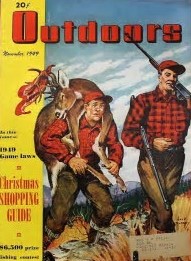
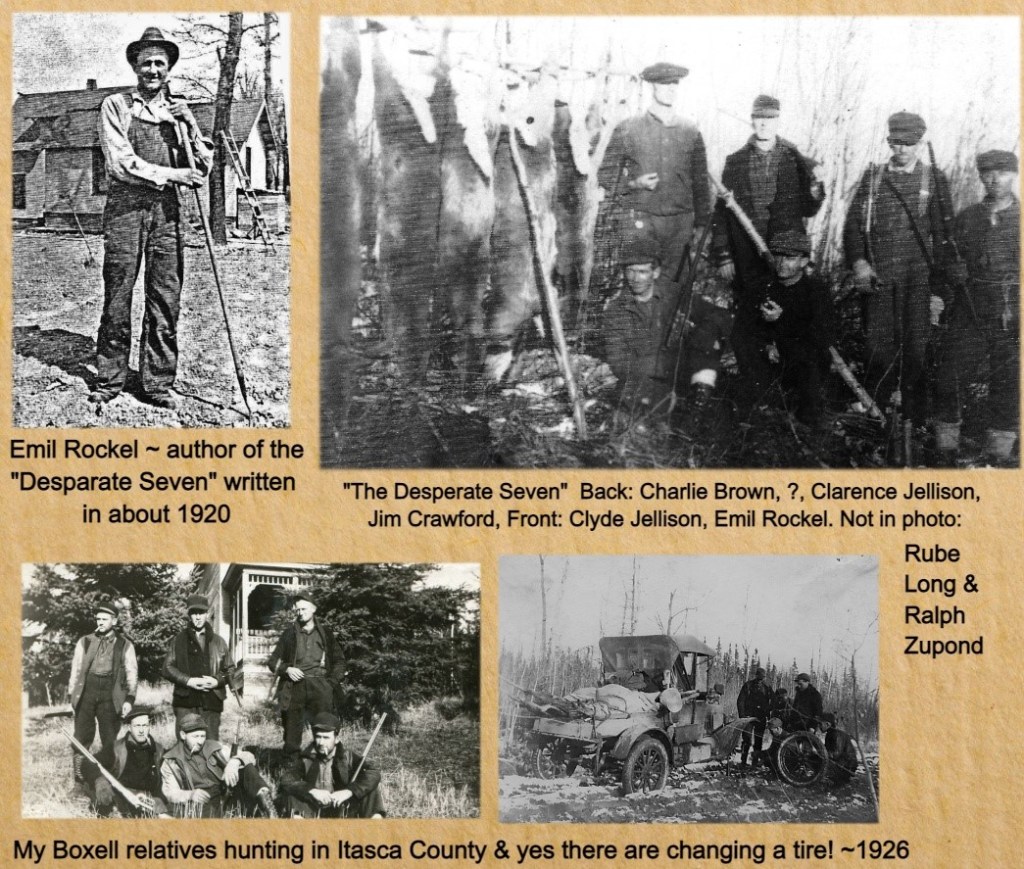
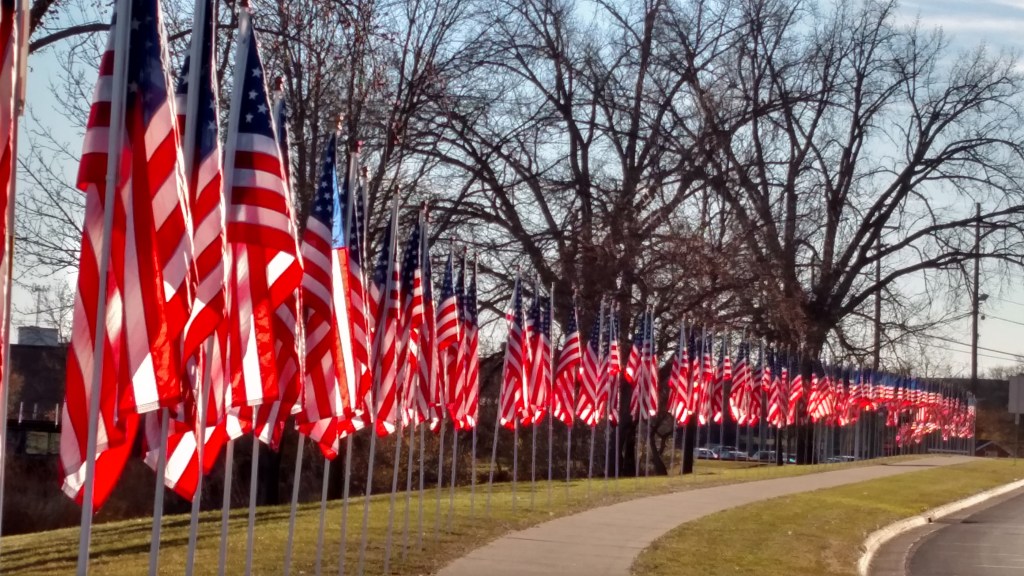

 chrismarcottewrites