“Percy has become quite an expert fiend of photography” ~ We’ve Got Talent ~ Part II

3.28.2021

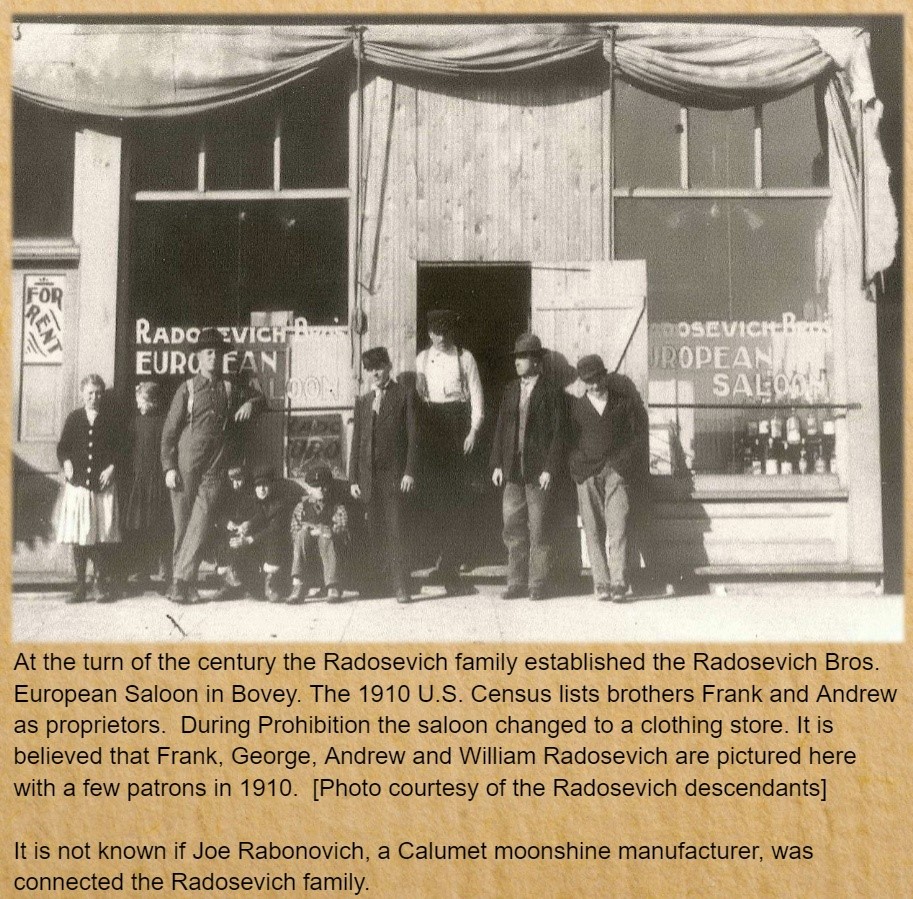
I knew that my grandmother, Hellen (McQuillen) Scheer liked to paint. When she and Gramps moved from Bigfork to Colorado in the late 1960s, she began taking classes and painting in earnest.  What I didn’t know was that she first held a brush to hand-color a black and white photograph of my gramps when they were courting.  This was in the mid-1930s when film for colored photos, was still ­a dozen years in the future.

I have collected stories about artists from the old newspapers since I started the Reminisce project.  I know there are many more artists than those I am sharing, so please let me know who the artist in your family is. Today’s column is about visual art. The final segment, next month, will be on writing.

Painting

In 1908, the Bigfork Settler reported that William Lake had received two beautiful oil paintings last week of sceneries on the Bigfork River painted by his brother at Hoffman.” William and his brother Leonard, a house painter, were from a small town in west central Minnesota. William filed on a homestead in the Big Fork Valley in about 1905.  It would be interesting to know if Leonard sketched the scenes while visiting his brother, or if he had painted from memory or a black and white photograph.  Also, wouldn’t it be fun to know where these paintings are hanging now?

Ida May (Williamson) Martin was another painter identified by the Bigfork Settler. “Mrs. J. R. Martin shipped 4 paintings to Duluth Saturday.  She has shipped several paintings there in the past few months, where she has found a ready sale for them.  Many of these pictures are of different sceneries about Bigfork and the recipients of the same are loud in their praise of the beauty of the same.  What a treat it would be to some of the city folks to visit these parts and have the chance of seeing and enjoying all the real beauty that nature produces here at different periods of the year.  Beautiful sceneries that the majority of us, who live here, have become so accustomed to that we pass them by without even giving them a second thought.” In May 1925, when the article was written, Ida was 67 years of age and raising four grandchildren.

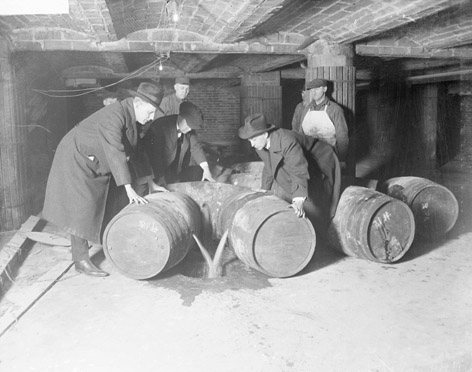
In the archives of the Itasca County Historical Society, I found a lovely pastel painting that was created by Mrs. Amy Porter.  She lived and farmed with her husband Charles near Rabey, MN in northwest Aitkin County. One of the small painting she made was for a dear friend, Josephine (Burt) Crowe who lived in Grand Rapids. Amy painted many pictures, Christmas cards and birthday cards with pastel paints. The painting she did for Josephine Crowe was created on a 1953 tax receipt!

Photography

In 1898, Percy Brooks purchased the interest of C.H. Marr, the joint owner on his father’s store, so that Percy and his father Asa were co-owners. The A.D. Brooks & C.H. Marr General Store was the first merchant in Deer River.  Percy enjoyed new-fangled merchandise and in 1901 he was busy with a camera. “Percy Brooks is making an album of large photographs of scenery and other things in and about Deer River when examined will already furnish amusement for several hours.  Percy is becoming quite an expert fiend of photography and he lets nothing pass that is worth ‘shooting’ at. He has one picture of a smallpox patient which looks so natural that it has actually given people the itch by looking at it.” [Itasca News 5-4-1901]

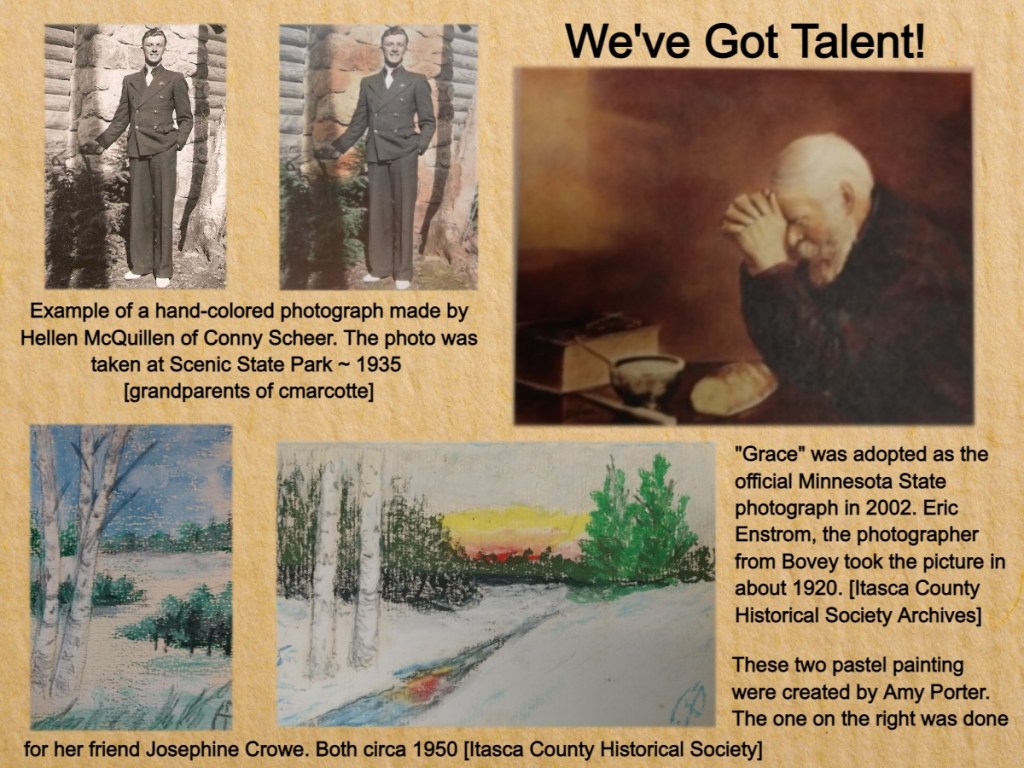
On the 1905 Minnesota State Census, Eric Enstrom is living in Milaca and his occupation is stated as photographer. By 1910, he and his wife Esther and son Roger are living in Bovey where he has his photography studio. Enstrom is best known for the photo “Grace” which he took in about 1920. It depicts an elderly man bowing his head and giving thanks. “Grace” was adopted as the official state photograph in 2002.  Before that photo received notoriety, Enstrom was recognized for his ability to capture subjects in a unique way.

Local Girl Model for Prize Photo ~ Grand Rapids Herald-Review 8-11-1926

“The Enstrom Photograph Studio of Bovey was awarded a silver loving cup offered to the best photographer on the Mesaba Range.  The contest, arranged by the Range Association of Photographers, was for the best photograph taken of the same model, and John R. Snow of Mankato acknowledged as one of the best photographers in the state, was the judge.

“Miss Peggy Wells of Grand Rapids was the model.  Miss Wells went from one gallery to the next and was posed and photographed by the different artists.  Each gallery was given a number, and the numbered pictures sent to the judge in Mankato.

“The prize of a large silver cup will be displayed in the windows of Enstrom studio.  The Larson Studio of Virginia won second prize. The Range Association is affiliated with the National Association of Commercial Photographers. The winning photograph of Miss Wells will likely be entered in other contests in the state and elsewhere.”

As this article was written between censuses, I am not able to provide much information about Peggy Wells.  In fact, the only document I could find for a Margaret Wells was through the Minnesota Marriage records.  It states Margaret Wells and Matt A.H. Gielen were married on Jan 26, 1935 in Itasca County.  On the 1940 U.S. Census, Gielen is listed as married and living with his brother-in-law in Grand Rapids.  I could not find Margaret or Peggy Gielen.

The next article is also about the subject of a photograph. Walter Olson is the eighteen-year-old son of Peter and Olga Olson. I searched through an online newspaper site but was unable to track down the pictures. Perhaps the name of the newspaper was incorrect, but the information is still interesting.

Local Young Man is Shown in Picture ~ Deer River News 7-25-1929

“Walter G. Olson, son of Mr. and Mrs. Peter Olson of Deer Lake, is one of several workmen shown in pictures taken recently at the hangars of the Universal Air Lines in Chicago.

In a series of photos published in the Chicago Daily News last Friday, Walter is shown working on a Fokker plane being prepared for a passenger run to Cleveland. He is shown placing radio shielding, for the use of the radio while flying.

Walter has been with the Universal Lines since last fall and is rapidly advancing in his chosen work.  Betcha some day he’ll fly back to Deer River.  And when he does, this paper hopes we’ll have a landing field that will permit a safe welcome home!”

Film

In August of 1927, Williams Narrows Resort on Big Cutfoot Sioux Lake was in the movies.  Charles E. Belle, a photographer for Paramount Pictures came to the resort for the express purpose of capturing the Northwoods on film. “While here Mr. Bell took nearly five thousand feet of film for his company, much of it of animals at the Narrows’ zoo.  It is hoped the films may be brought here for showing.  They will prove splendid advertising for this region.”

According to the Apr 7, 1927 Deer River News, “Mr. Williams reports the purchase of the following additions to the zoo: two each of leopards, Canada lynx, coati mundi, cougar, opossum, peccary, timber wolves, sphinx baboon, badger, black-faced ape. Angora goats. Black fox, Wanderoo monkey, Java Monkey, Capuchin ringtail monkey, smoky mangabey, white-face ringtail, African geese, pea fowl, cayuga black duck and Egyptian pelican, and four alligators. These additions will make this one of the largest zoos in the state.”

The final article I have to share was also filmed at a resort.  The local film star, Marvel Clarice Cleveland, is the daughter of Oscar and Jennie. 

Local Girl in Minnesota Movie Show ~ Deer River News 6-21-1945

“After seeing the Minnesota State Tourist Bureau movie ‘short’ at two theatres while on a recent vacation, the news editor had to come back to Deer River and see the same short at the Lyceum Wednesday night to learn that Miss Marvel Cleveland of Talmoon was featured in three scenes of a fishing excursion shown as part of the film advertising Minnesota.  The scenes showed Miss Cleveland catching a fish, a closeup displaying a string of fish and then one of the fishing party cooking and eating the fish caught.  The fishing excursion, it is understood, was filmed at Camp Idlewild, Marcell, not far from Miss Cleveland’s home.  Miss Cleveland graduated from the Deer River high school with the class of 1945 on May 30.”

Walter Stickler established the Idlewild resort in about 1912.  He was a staunch supporter of the resort trade of northern Minnesota, and on the 1940 U.S. census his occupation is listed as ‘lecturer’ and the industry ‘resorts.’ In August 1929, he invited Dusty Rhodes, a pilot from Hibbing to land his plane, a sister ship of the famous “Spirit of St. Louis.” During the afternoon, he took 78 lucky passengers, four at a time, for a ride.

To share your stories, email reminiscewithchris@gmail.com, call 218-244-2127, or leave a message on my blog chrismarcottewrites.  Just enter the following address in the browser and you should be good to go: https://chrismarcottewrites.com

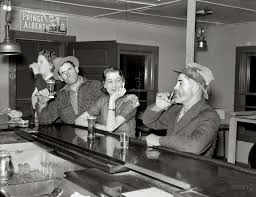
Women on the Farm in Ardenhurst Township, Itasca County

3.21.2021 [archived ~ originally published 3.9.2015]

During the past four months, I have spent at least twelve hours a week at the Itasca County Historical Society in Grand Rapids.  For the most part, I have been looking at Deer River and Bigfork newspapers’ old issues.  The staff and volunteers are a close-knit group and very helpful to amateur genealogists or historians.  The research area is one large room with several workstations as well as computers for community use. I love being there on quiet days, but I also like the excitement of some of the busy days. 

Recently I was perusing the microfilm while the historical society director Lilah Crow was organizing books in a new shelving unit.   Well aware of the research and writing I have been doing, she said, “Chris, you might want to take a look at this.”  She held a non-descript book entitled Woman on the Farm.  “This has a very interesting story behind it,” she added and went on to explain that it belonged to Alma Anderson, a woman who lived in Ardenhurst.  This township is in the northwest section of Itasca and borders Koochiching County.  It is up Hwy. 46 about thirty-five miles north of Deer River. Alma had received the book as a gift from her daughter Ruth.  On the first page, Ruth had written, “With Love To Mamma from Ruth – An appreciation of a mother on the farm.”

Woman on the Farm was written by Mary Meeks Atkeson and published in 1924.  Atkeson explains her intent in the foreword.  “Introducing the woman on the farm – her work, her problems, and her point of view of life – is the purpose of the present volume.  In its preparation, the farm woman herself has given much assistance to the writer.  Nearly a thousand special correspondents, representing every State in the Union, have taken time in their busy lives to write their views upon one or more of the subjects here discussed.”  The fourteen chapters cover everything from the farm home, grounds and gardens, to home business, politics, and national organizations, with a liberal sprinkling of children, school, church, and community.

Alma enjoyed the book and decided to share it with her dear friends and neighbors.  As it was passed around, each reader signed the page below Ruth’s inscription.  In addition to Alma Anderson’s signature, it was signed by Mrs. A.W. Nelson, Mrs. J.E. Guptill, Mrs. J.D. Brandon, and Mrs. R.J. Field.  I eagerly took the book and spent a couple of hours reading chapters that caught my eye. 

I decided to see what I could learn about the five women who had also turned the pages.  I wanted to know when the women might have read the book and wondered, too, if the book was given as a gift on a birthday, Christmas, or Mother’s Day, perhaps.  The volume I found online had a jacket cover to protect it.  This copy no longer did.

Alma was born in Sweden in 1870 and immigrated when she was twenty-years-old.  I spent hours searching ancestry but could not definitively find her maiden name. She married Albert Anderson, a man from Norway, in 1898.  The Andersons lived in Polk County, Minnesota, in 1900, but by 1910 they were settled in Ardenhurst. Alma and Albert had seven children, Esther, Bertha, Hilda, Ruth, Andrew, Melvin, and one baby who died in infancy.

Mrs. A.W. Nelson, otherwise known as Emma Nesseth, was born in Wisconsin to recently immigrated Norwegian parents.  Her mother died by the time she married Andrew in 1899.  He emigrated from Sweden at age fifteen.  Andrew and Emma were married and raised their family on a farm in Washington County, Minnesota.  They moved to Ardenhurst between 1920 and 1930.  There were other Nesseth’s in the area who may have been Emma’s brothers or cousins, which might have been why the Nelson family moved north.  I found documentation that in November 1908, Edward Nesseth married Hilda Berg in Ardenhurst.  Martin Nesseth was a witness, and Rev G.P. Nesseth performed the ceremony.

Mrs. J.E. Guptill is actually Sophia Rose.  She was born in 1882 in Scotland and immigrated as a small child with her parents David and Mary.  Sophia’s obituary states that “her parents homesteaded at Island Lake in 1898. She and her sister Jesse were the first young woman at Island Lake.  They took out their own homesteads in 1903.  Sophia Lake and Jessie Lake were named for them, and Muggins Lake is named for their dog.” 

Eventually, the Rose family settled in Ardenhurst.  The Guptill’s lived down the road, and as often happened, the two young neighbors married. John and Sophia set up housekeeping near their parents, and soon, daughters Mary and Edna came along.  Their farm on Island Lake was often the site of community picnics and was said to be a very picturesque spot as some of the white pines were left standing when the area was logged.

Mrs. J.D. Brandon’s birth name was Isabelle “Belle” MacDonald.  She was born in Canada in 1839 and immigrated in 1870.  She and Jesse Brandon married and started their family in Wright County, Minnesota.  In 1900 they were in Morrison County, in 1910 Koochiching County, and finally, by 1920, they resided in Ardenhurst.  Four of their seven children Earlie, Pearl, Roland, and Norman, lived to adulthood. 

Mrs. R.J. Field was born in Beltrami County in 1908. The name her parents, George and Frances, gave her was Cecelia Nina Horton.  Cecelia and Ralph Field’s parents were born in the United States, so this couple is the only second-generation family of the five.  Ralph’s father was a postmaster, and Ralph was the proprietor of a confectionary store in Northome when they married in 1926.  Shortly after 1935, the Field family with sons Charles and Lyle moved to the state of Washington.  As far as I can tell, this family never lived in Ardenhurst Township, but it is probably the Cecelia was friends with Belle Brandon as they both had connections with Koochiching County.  Also, it was much closer to shop in Northome, which is in Koochiching County, than it was to go to Deer River.

Ruth Anderson was about twenty-years-old when Woman on the Farm was published.  According to the 1940 census, she had attended college for four years, so she certainly had a good education and may have taught before she married Carl Peterson.  Alma and her daughter Ruth were both widows and living together in Ardenhurst by 1940.  Cecelia Field was the last person to sign the book, and her family had moved out of the area about 1936.  It can be assumed then that Ruth gave her mother the book sometime between 1924 and 1934 and that it was carefully read and passed from Alma to Emma to Sophia to Belle and finally to Cecelia by 1936.  As far as the occasion for the gift, we can only imagine.

“See America First ~ and Don’t Forget Craigville!” ~  Itasca County during Prohibition ~ part 8 of 8

3.18.2021 [archived ~ previously published 10.25.2020]

“Saturday Night in a Saloon” is one of the most famous photographs taken by photographer Russell Lee. It was shot in a bar that were still operating in Craigville in 1937. Lee was employed by the Farm Bureau Administration and traveled throughout the United States between 1936 and 1943 documenting American classes and cultures. The popularity of the photograph is the result of the producers of the television show ‘Cheers’ (1982-1993) using it in a montage with the theme song at the beginning of the show. [Courtesy of the Library of Congress. Access permitted reproduction number LC-USF34-030584]

Craigville is an unincorporated village located in section 36 of township 63-26, in Koochiching County.  Effie is four miles from the northern boundary of Itasca County, and Craigville is just over the county line (although locals know that at times Craigville has extended south into Itasca County).

The community is named for John Craig who was a woodsman who emigrated from Canada in 1883. John Craig (1941-2015) explained, “My grandfather came to Grand Rapids as a lumberjack for the Itasca Logging Company and he was the foreman in charge of all the camps.  His job was to hire lumberjacks and make sure the camps were running.  In the spring when they took the logs away, his job was to set up new camps for the next year.  Usually they built five camps every year and that was his perpetual job, keeping the places running.  That’s really how the town of Craigville got started. It was when they hired them [his crew] up at Craig.” [2010 interview, Itasca County Historical Society (ICHS)]

It is not clear exactly where the last camp that Craig built was located.  He died in January 1912.  John Reid of the lumber company Blake, Hawkins and Reid, stated in a 1960 lecture. “We built the first structure there [at Craig], a log camp, in 1912.”  [ICHS]  Reid bought out his partners in 1914 and operated a successful saw mill and lathe mill in Craigville until the Depression curtailed the need for the product in 1929.

Craigville Snapshot

The site had such extensive logging around it that during logging season thousands of loggers might be found in the local taverns. For most of the fourteen years that Prohibition was in place, the taverns of Craigville remained active. There were no lawmen in Craigville and it was a full day of travel from International Falls where the county jail was located.  Plenty of moonshine was made in the area, and it was rare that a tavern didn’t have what was needed to supply their patrons. Thus, Craigville was visited by folks from Itasca County as well as hordes of loggers.

Marion Brown (1902-1999) was a brakeman on the Minneapolis & Rainy River Railway between Deer River and Craigville during the latter part of Prohibition.  He commented on the way some situations were handled by the federal agents. “They [saloon owners] had an agreement with the bartenders in the event that the federal men would come down and close the joints up.  And they would put an official sign on the door.  But they had a standing agreement, the owners, and the bartenders, that the bartender would say that he was the owner.

“Well naturally, they would arrest him and take him to Duluth, and they had a standing agreement that he got five dollars a day for tending bar, and he also got five dollars a day for sitting in jail in Duluth.  And those feds wouldn’t be at the top of the hill about two miles out of Craig, and there would be another bartender in these joints.  The signs on the door didn’t mean a thing.” [Interview with Marion Brown conducted by John Esse 1975 ICHS]

In February1926, Frank Miller, the proprietor of a hotel in Deer River, reported to the Itasca News that he had seen the sights and sounds of Craigville and recommended that others do too. Miller had been to one of the logging camps with a local physician to check on a family member and they stopped on the way home at a saloon. “‘We saw seven fights [bar brawls] in fifty-two minutes,’ said Mr. Miller. ‘And believe me, they were no petting parties.  It was just zip-bang-whang from start to finish.’

“Entering a refreshment establishment with one of the proprietors, the bartender was found prostrate across the counter.  The owner shook him savagely.  An argument followed, ‘Come out doors and tell me that,’ yelled the barkeep.  Out they went. Bim-Bam-Flooie! And it was all over.  The other partner appeared.  ‘Hey! What you doing’ with that fellow? I hired him.’ ‘And I fired him,’ was the reply.  ‘What you goin’ to do about it?’

‘You would have thought it was the month of June,’ said Miller.  ‘They sat around on ice cakes, piles of timber, just anywhere, at midnight.’ Mr. Miller insists that the management of the Great Northern railway has overlooked a good bet.  On the side of every box car put out by the company, is painted in large letters: See America First!  He says the slogan is incomplete, and at the next meeting of the commercial club will ask for a committee to appear before Great Northern officials and ask them to add at the bottom: And Don’t Forget Craigville!” [2-11-1926 Itasca News]

Two months after Miller’s visit to Craigville, the infamous gunfight between Dan McGinty and Mike Cunningham took place in the Gem Cafe.  Although Cunningham was seriously injured, he shot McGinty through the heart, killing him instantly.  Cunningham survived, but did not return to Craigville. My guest contributor, Mark Anderson wrote about this in a 2016 Reminisce column. Email me to request a copy.

Howard Park was born in 1922 in Internationals Falls.  In about 1925, the family moved to Craigville where his father, Mike, built a saloon, poker parlor, lunchroom and sauna.  Many of the lumberjacks were Finnish and patronized all facets of the business built by a fellow Finn. The Eagle Bath House was a busy and lucrative place.  Howard described it as one of the nicest businesses in town. Practically all the buildings were tarpaper sided shacks and saloons.  Ours had siding that was blue-gray mineral surface roofing with battens.  It was about 32 x 60 with the rear 15 feet devoted to a sauna and dressing room.  An adjoining shop allowed feeding the sauna heating stove.  We also had the only electric lights in Craig via a generator and several banks of large glass batteries.

“My father served moonshine, Canadian liquor, and a home brew to the jacks as did the other saloons.  He also served as mediator during fights, loaned money, and kept a ‘tab’ for the jacks which they paid when payday came again.  I can remember seeing him coloring moonshine with caramel to look like bourbon.  Also using charred wood kegs to ‘age’ some of the harsher booze.”  [Correspondence Howard Parks and Bill Marshall 1995-2000, ICHS]

Howard was about six years old when he had a bit of a run in with a lumberjack he refers to as Pillicuffie. This may be Billy Coffie, a man I have found mentioned elsewhere. I have a vivid memories of Pillicuffie.  For some reason, probably on a weekday, only a few jacks were in the saloon, my father must have been out temporarily, and I was sort of babysitting the store.  My memory is faint but Pillicuffie started to tease me or something and I became angry.  I ran into a side room where my father kept his only gun, a single shot 410 shotgun, and grabbed it to chase Pillicuffie. 

“Well, I knew I would not shoot him for such a small reason, and he realized it soon also.  So he, in turn chased me around the bar with me threatening him with the gun. (He had more guts than sense to provoke a 6-year-old with a loaded gun.) Anyway, it was resolved, probably with my father’s returning to the saloon.” 

Sadly, in January 1929, Howard’s father Mike committed suicide.  Howard, his younger brother, and their mother Lydia were devastated. Lydia, with the help of her sons, kept the business running for a few more years before selling it.  The steam bath was the only place to get clean other than the river, so it remained a viable business into the 1950s.  

Seclusion Made it Easy

It seems hard to believe that there wasn’t more of an effort made to follow shipments of supplies that could be used for making moonshine.  Maybe northern Minnesota was just not a place to worry about compared to the large cities where organized crime and moonshine went hand in hand.  Marion Brown recalled: “We used to haul practically by the carload, it wasn’t brown sugar, but it was some type of hard sugar that felt and handled more like a bale than a sack of sugar, and raisins.  That’s what they made the moonshine out of, and the going price for moonshine I know at that time to these joints, from the moonshiner was four dollars, four and a half dollars a gallon.  We had one moonshiner up there that was better than the rest of them, and he would get five and a half, six dollars for his, but his clientele were more or less the business people, the loggers and people like that around the area. [Marion Brown Interview 1975, ICHS]

Alcohol arrests in the far north were minimal.  These are the only records I found in the local papers. 

~ “Frank Flint was arrested in the northern part of Itasca County, near Craig, by Deputies Dickie, Dunn and Tupper.  He pleaded guilty to operating a liquor nuisance and paid a fine of $100.” [12-17-1924 Grand Rapids Herald-Review]

~ “John Quinn and Ethel Hines, formerly located at Craig, moved to an old logging camp west of Bigfork, where they were in Itasca County instead of Koochiching, in order to be handy to sell liquor to the road crews operating in that vicinity.  Quinn paid a fine of $100 and costs, while his consort paid $50 and costs, and it was intimated to both of them that Itasca County was not a place for them.” [8-3-1927 Grand Rapids Herald-Review]

~ “Cornelius B. Francisco of Craig was arrested last Saturday by a deputy sheriff and charged with maintaining a liquor nuisance at the Effie Fair.  Francisco pleaded guilty and was sentenced to pay a fine of $100 and costs or serve 60 days in jail.” [9-10-1930 Grand Rapids Herald-Review]

~ “Victor Parsons of Craig was arrested at a dance near Effie by Harry Lamson, special dance deputy.  Parsons was charged with selling liquor at the dance, and when arraigned before Judge Keo Leroux pleaded guilty. As this is a matter for determination by a district judge, Parsons was remanded in jail until he could be brought up in district court.” [3-2-1932 Grand Rapids Herald-Review]

Why Quit a Good Thing

Gene Rajala was born three years after Prohibition was repealed, but he told me that anyone who made good moonshine always had buyers. “We had a moonshiner who made moonshine way later.  He lived about two miles from us and when he’d come by, he always brought my dad a pint or half pint. His name was Archie Loven, but you won’t find his name [in the newspapers] because he was too smart.  He always had a nice big shiny car and wore a bow tie.  His wife, Lizzie had really nice clothes compared to the farmwives and homesteaders around here. He wasn’t employed. He had a homestead but never cleared land or farmed it or had livestock.  He was just kind of a ‘fancy Dan’ moonshiner.

“He took his product to the dances at all the town halls.  He’d park in the parking lot and sell half pints from the trunk of his car.  You never got rid of a half pint bottle (slender, easy to fit in shirt pocket) – it was worth more than the whiskey in it! Archie had contacts with the town hall supervisors and maybe some of the bands. They were here making and selling moonshine up until the 1950s.” [Interview 10-10-2020]

I verified the facts on the Lovens, but have not (yet) on another moonshiner Gene remembers.  “Tryanoski’shad made booze in Chicago and then set up an operation on Holstrum’s Spur which was in Koochiching County.  They brought all their equipment with them and also some folks who had been making it for them. One of them was named Joe Hammond.”  [Interview 10-10-2020]

Final Words

I wrote the first of this series in July, encouraged in part by the memories of my grandfather, Clarence Scheer.  I’m sure if he was still alive Gramps would chuckle as you did at the names he recognized and the ingenuity of the moonshiners.  Regarding Craigville, there are many more stories to be told, some of which I will highlight in this column in the future.    

“Peddling Booze on the Side” ~ Itasca County During Prohibition ~ part 7 of 8

3.16.2021 [archived ~ originally published 10.11.2020]

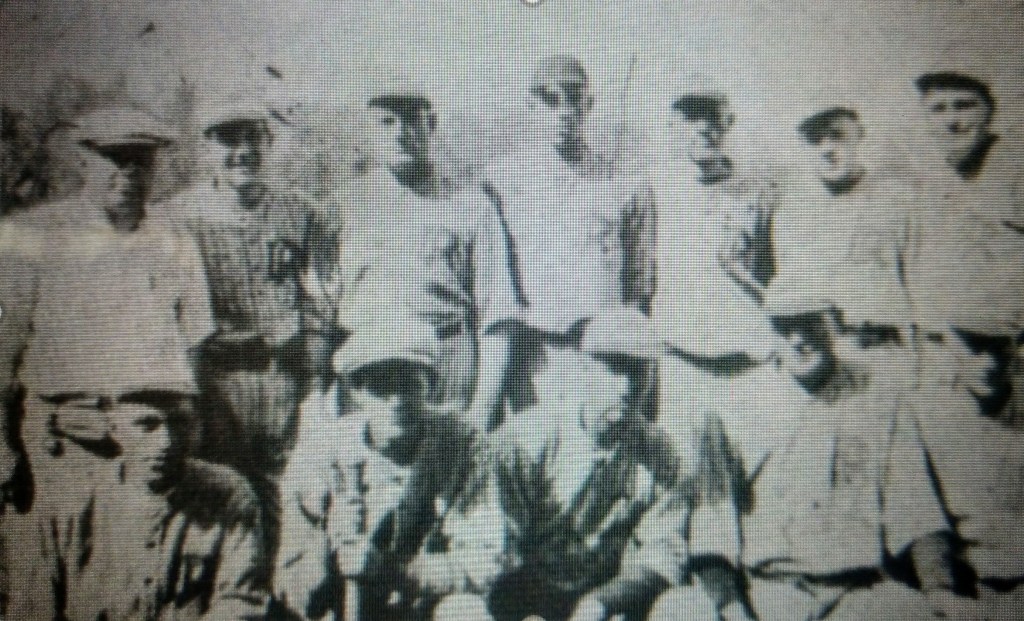
In 1925 Dr. Dumas was manager of the Deer River Baseball Team.  He is pictured here with the three Guertin brothers.  All were indicted as part of the Bootleg Ring in 1928. The players are left to right, front row: L. Guertin, Fleming, Grimes, H. GuertinP. Guertin. Back row: Dr. DF Dumas, manager; Kester, Jake Reigel, coach and utility, Zackariasen, Schouweiler, Lavoy, and Geo. H Herreid.

Six months ago, I wrote about the dedication of Dr. Delbert F. Dumas, the primary physician for Deer River, during the 1918-1920 Spanish Influenza epidemic.  Ten years later, he was arrested as part of a bootlegging ring and eventually sentenced to Leavenworth Penitentiary.

I first came across the name Dumas and the words booze and prison years ago when reading the transcripts of an interview done with Isabelle (Wagner) Lekander from Deer River.  Born in 1914, Isabelle would have been about the same age as Dr. Dumas’ children, and her most likely was a patient at one time or another.  She said, “Dr. Dumas was peddling booze on the side and got sent to some prison. He is in with these big deals.  Then he moved from here to Bemidji.”

Delbert Frederick Dumas graduated from the College of Physicians and Surgeons at the University of Illinois. He had been a practicing physician for five years before opening an office in Cass Lake in 1907.  Nine years later, he and his wife Hazel settled in Deer River with their two children, Fred and Julia. Their last child, Delbert Jr. “Buster,” was born in 1917.   

Dr. Dumas seemed to have a lucrative practice and was a community leader.  In 1925, he was the manager for the Deer River baseball team and expanded his time to include the northern communities.  “In order to give better service to patients, Dr. Dumas has changed the day of making visits to Bigfork, and in the future, he will be at the Woodland Hotel every Tuesday instead of Saturday. This change is made for the reason that in case medicine needs to be mailed to the patients, it will reach them much earlier than if he made his visits here on Saturday.” [ Bigfork Times 6-19-1925]

In 1927, he was lauded for investing in an ultra-violet ray lamp for the treatment of tuberculosis, eczema, anemia, and various skin diseases.  “When installed, the doctor will be the possessor of equipment most uncommon in villages the size of Deer River. This is a most expensive piece of equipment, and the doctor is to be commended for bringing one to this section.” [Itasca News 1-27-1927]

What Happened?

I’m not sure why Dumas was involved in illegal liquor activities.  I have a few sketchy newspaper articles, but because the trial took place in Federal Court in Duluth very little information was available in the local newspapers.  The initial arrests were made in the fall of 1928, but Dr. Dumas and others involved were not convicted until December 1931.  The only mention that might be about this case was in the last paragraph of an article about Prohibition. “Several other arrests were made by members of the sheriff’s force during the week, but trials or hearings are yet to be conducted after thorough investigations have been made.” [Grand Rapids Herald-Review 11-21-1928]

Liquor Ring is Broken Up Now ~ Grand Rapids Herald-Review 12-16-1931

“Several Itasca County citizens are concerned in a liquor ring which it is alleged operated in two counties last spring.  Seven men were sentenced to the Federal Penitentiary at Leavenworth, Kansas and one is to be confined in the Itasca County Jail. The man who federal operators claim is the leader is to be tried this week in Federal Court in Duluth.

“Dr. Delbert F. Dumas who practiced for many years at Deer River but who moved to Bemidji some months ago, pleaded not guilty when brought up in Federal Court and is to be tried this week.  In the same case, Leo Guertin of White Oak Point was sentenced to three years in federal prison but placed on probation. Paul Guertin, Jr. was sentenced to six months in the Itasca County Jail.  Andy Walker and Ben Peterson, who live west of Deer River, pleaded guilty but will not be sentenced until after Dr. Dumas has been tried.  Charges against Henry Guertin, Arthur Haglund, and Oliver DePalma were dismissed.

“Seven men who live in and near Hibbing must go to Leavenworth or some other federal prison for their connection in this alleged liquor ring.  They are Mike DePalma, one year and a day; Joe Venni, two years; Louie Schiclich, one year and a half; George Potvin, one year and a day; Frank Sikich, two years; Louis Salata and Jack Green, each a year and a day.

“This case has been under investigation by federal operators for about half a year.  It is claimed that the still which was finally seized at a location north of Hibbing, had been operated at one time west of Deer River and again in the vicinity of White Oak Point.  There has been a great deal of speculation locally as to the identity of all parties involved, and this statement coming from the federal court will clear up that matter.”

Leo, Henry, and Paul Guertin were brothers.  At the time of the arrests, they lived with their parents, Paul Sr. and Mary, on a farm at White Oak Point about six miles south of Deer River.  Andy Walker’s farm was four miles northwest of Deer River on what is now County Road 46, and Ben Peterson lived nearby.  Dr. Dumas lived in the village of Deer River.  The other men involved in the moonshine operation were located in St. Louis County. 

Of course, my interest was piqued by the last statement in the article, “there has been a great deal of speculation locally as to the identity of all parties involved and this statement coming from the federal court will clear up that matter.” Therefore, I was disappointed when none of the trial details were available in later local newspapers.

Dumas Convicted on Liquor Count ~ Grand Rapids Herald-Review 12-23-1931

“In a verdict handed down by a jury in Federal Court in Duluth Friday morning, Dr. Delbert F. Dumas, Bemidji physician, was found guilty on manufacturing liquor.  A sealed verdict had been returned in the case the night before after the jury had deliberated three and one-half hours.  Sentencing was continued by Judge William Cant to 10 a.m. Monday, Dec 28.  A.M. Carey of Minneapolis, attorney for Dr. Dumas, asked for a stay, claiming that Dr. Dumas is in a serious condition physically.  Pending an examination, Dr. Dumas is out on a $10,000 bond.

“Dr. Dumas faces a maximum sentence under the Jones act of five years in the federal penitentiary at Leavenworth and $10,000 fine.  Although indicted on three counts involved in connection with the operation of a still on a farm four miles from Deer River in the fall of 1928, possession of mash and manufacturing of liquor, the first two charges were dismissed at the opening of the trial, and the defendant tried in the manufacturing count.

“Arthur Haglund of Hibbing, a partner in the truck firm who testified for the government that he hauled sugar and supplies to the farm and was indicted with Dr. Dumas, was released yesterday.  Mike Knozovich of Hibbing, another defendant, was also released.  Ben Peterson and Andy Walker, owner of the farm, also indicted with Dr. Dumas, who had pleaded guilty earlier in the week, were placed on probation.  Peterson was given a year and a day at Leavenworth and paroled for two years.  Walker’s sentence was continued to December 1933, with a two-year parole clause included. Five other men indicted with Dr. Dumas have not been apprehended.”

On Monday, Dec 28, Judge William Cant sentenced Dr. Dumas to serve 3½ years in the Federal Penitentiary at Leavenworth, Kansas, and that he also pay a fine of $2500.  Dumas’ attorney, A. M. Cary, indicated he would ask the circuit court of appeals for a new trial.  I could find no further mention of this and had to search before I eventually located brief notes about the case in the Iron Range Magnet News of the Week column.

Jan 29, 1932 ~ “Dumas has been granted an additional stay until Feb 17, according to an Associated Press dispatch from Duluth, which stated there was no federal judge in Duluth at the present time. At the time of sentencing, counsel for Dr. Dumas intimated an appeal would be made.”

Feb 26, 1932 ~ “Dr. D.F. Dumas’ sentence has again been extended until Mar 1, as Judge Cant is ill.”

I could find no more information on Dumas until 1934 when he is listed in the Bemidji City Directory as a physician!  He died in 1939 and was interred beside his parents in the Lakewood Cemetery in Minneapolis.  I believe there is much more to Delbert Frederick Dumas. When the Gale Library at the Minnesota Historical Society is open once again, I will pursue my research there.  If Cary appealed his case, the court documents should be on file.

“Did You Ever Hear Oscar Pearson Sing?” ~ We’ve Got Talent ~ Part I

3.14.2021

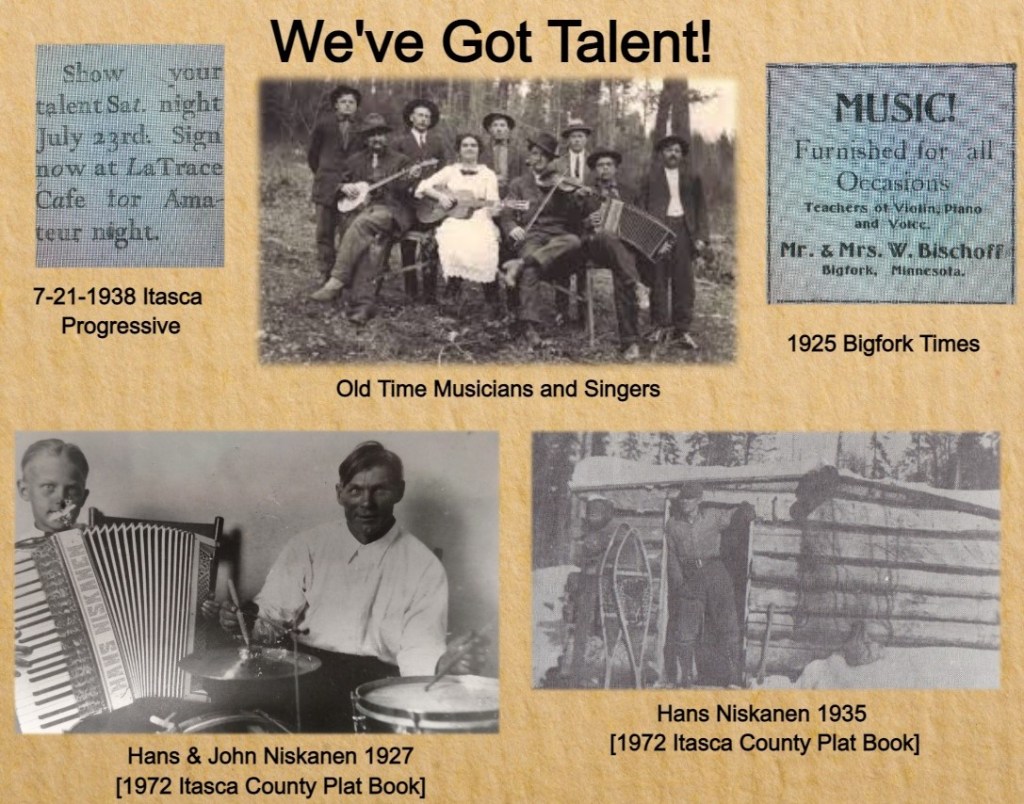
My grandfather, Clarence “Conny” Scheer, was a jack of all trades – lumberjack, fruit picker, miner, barber.  He also, on occasion, sang for his supper. As a kid, I remember him playing the ukulele, one of his many stringed instruments.  He would sing, “You Are my Sunshine,” “Good Night Irene” and even some bawdy tunes he learned while in the Philippines during WWII. Gramps started singing for the public when he was about nine years old, under the tutelage of William and Ivy Bischoff.  The Bischoffs lived in Bigfork, provided music for local dances, and taught violin, piano, and voice.

As a young adult Gramps entered contests when he had a chance, and I found evidence of this in an article in the July 28, 1938, Itasca Progressive. “The Major Bowes Amateur Hour and dance at the village hall last Saturday night proved to be a function that furnished ample entertainment to all those who took advantage of attending and was pronounced a success both from the financial and social standpoint.  The winners are as follows: Rosemary Lorgren first prize as piano accordion player, Jasmer Bros., second prize singing and guitar, and Clarence Scheer third prize for solo singing and guitar.  Thanks goes to the judges Mrs. F. Evensen, Sextus Solomson and Lindy Kyndahl. Also to Mr. Graham for the very satisfactory manner in which he carried out the part as Major Bowes.” The Major Bowes Amateur Hour was an American radio talent show broadcast in the 1930s and 1940s, created and hosted by Edwards Bowes.  The Bigfork event was not affiliated with the radio show, but because of the popularity the name was used, and Mr. Graham acted as the host.

Circus performances, minstrel shows, and other traveling entertainment have always included northern Minnesota in their circuits, but back in the early years, such events were generally few and far between.  Local talent was encouraged and cultivated, sometimes to raise money for a worthy cause, sometimes it was a contest, or other times it was  pure entertainment.  Below is a smattering of local performance artists.

In 1909, a five-act drama was performed as a benefit for first the Deer River Catholic Church and then the Methodist Church.

A Home Talent Play “The Strike” ~ Itasca News 1-16-1909

“The talk of the town is the home talent play, ‘The Strike’ or ‘In the Shadow of a Crime.’ Which will be staged at Winslow’s Hall next Tuesday night by all local talent for the benefit of the Catholic Church. The show is an exemplification of the conditions of today as between the laborer and mechanic and the big employer, and as the company having the entertainment in hand has the production well mastered, these facts and together with the cause in mind for which the play is given ought to ensure a liberal attendance.  It is expected that more tickets will be sold than there are seats in the opera house, and so that all who wish may see the play, it is agreed that if the hall is overcrowded the play will be put on again at a near future date for the benefit of the Methodist Church.”

The cast included the following individuals: Mrs. Odelia Golla, Albert Hachey, James Hewis, Owen Hulehan, Cyrus King, Frank Mohr, Fred Nelson, Laura O’Connell, and Earl Shreve. The performance was considered a great success and the church netted eighty-seven dollars.  A second performance was indeed scheduled for early March to benefit the Methodist Church.  Many of those who went to the first performance promised to attend again. Some went for the play and others to hear Miss Francis Winsor and Miss McCormick sing between the acts.

When radio became something that could be enjoyed in the rural areas, some radio stations offered opportunities for local talent to be discovered.

Staging Big Radio Discovery Contest ~ Deer River News 4-14-1927

“Broadcasting station WAMD will stage a talent discovery contest at the Grand Theater in Grand Rapids next week.  Preliminary contests will be held Monday, Tuesday, and Wednesday evenings, with the finals Thursday night.

Six contestants will compete each night in the preliminaries.  The audience will choose two, who enter the finals.  The winner of the final contest will be given a free trip to Minneapolis, to compete in the statewide contest, when $1,000 in prizes will be awarded.

Several entries have been made from Deer River.  They will compete Monday night.  The list up to today included Roberta Womack [vocal solo], Marguerite Foley [vocal solo], Helen Holl, Esther Lindgren [vocal duet], Lawrence Brown, Wm. Forsman, and Wm. Stejskal [vocal trio].”

The winners of the first night in the preliminary contest were Lawrence Brown, William Forsman, and William Stejskal. Lawrence was sixteen, and the other two boys were eighteen.  The final contest was also at the Grand Theater in Grand Rapids, but I could not find the results of the competition in either the Grand Rapids or Deer River newspapers.

Dances have long been an enjoyable pastime for young and old.  If someone with a fiddle would play, others would dance. If more than one member of a family was musical, they might consider establishing themselves as a band for hire.  The Fideldy brothers near Cohasset and the Ingstad brothers from Jesse Lake are two examples. Another is the Niskanen family from Good Hope township in the northern part of Itasca County.  John and his wife Manda immigrated from Finland in 1913. By 1927 they had four children, and at least eleven-year-old Hans was musical. Hans played the accordion while his father played the drums (see photograph). As a young man, Hans received a generous cash prize for another excellent talent he possessed.

Wins $1,000 in Fur Dressing Contest ~ Deer River News 6-2-1940

“Hans Niskanen, popular young man of Squaw Lake and well known for his ability as an accordion player, this week won an honor well worth winning.

Several weeks ago, the large firm of Sears, Roebuck and Co., Chicago, inaugurated a fur dressing contest, offering liberal prizes for the best dressed pelts submitted.  Mr. Niskanen entered the contest, submitting a mink pelt for his entry.

Last Monday Mr. Niskanen received a letter from the company, with which was enclosed a check for $1,000, and announcing that he had won first prize. In a nationwide contest, this is a great honor and Mr. Niskanen deserves great credit.”

In 1929, Deer River organized a very successful talent contest at the Lyceum Theater.  It was free to enter, offered cash prizes, and included a pie eating contest.

Home Talent Show Largely Attended ~ Deer River News 4-25-1929

“The home talent contest staged at the LyceumTtheater last night brought out what is believed to be the largest attendance that ever packed the local show house.  Long before the regular program began, every seat was taken, and more than a hundred people were standing.  Scores were unable to gain admission.

“Two dozen contestants from communities reaching from Grand Rapids to Bass Lake appeared on the program.  J.R. Mallatt of Grand Rapids was awarded first for all-round old-time fiddler and also in playing ‘The Girl I Left Behind Me,’ and ‘The Irish Washerwoman.’  W.T. Morrison won first for fiddler over 75 years of age, and Levi Lagos, from Bena placed first in playing a selection of the contestant’s own choosing.

“Other awards went to Ingstad Bros. of Jesse Lake for best duet, Karl Hammergren for best old-time song and accordion playing, Fideldy Bros. for best vaudeville number, John Byers for best stringed instrument number, and Albert DeZutter for the pie-eating contest.”  Albert was 14 years old!

I had previously learned that the Fideldy brothers were quite musical and traveled throughout the county to help make ends meet on the family farm. According to the 1930 U.S. Census there were three brothers, Vincent, Jerome, and Ralph.  There were five Ingstad brothers on the same census, Carl, Bernard, Thomas, Edward, and Arthur. In both instances I’m not sure which and how many brothers were the musicians.

Certainly, there are many more performers than I have highlighted here, and as always, I love to learn your family stories. Please email reminiscewithchris@yahoo.com or call 218-244-2127 to share.

And here is one more story I think you’ll enjoy.

Did You Ever Hear Oscar Pearson Sing? ~ Deer River News 1-19-1933

“Itasca County received special mention from the legislative scribe in last Sunday’s Minneapolis Journal.  Discussing Speaker Munn, the Journal said:

Mr. Munn incidentally renewed a friendship of 30 years ago when Oscar Pearson of Bigfork, Minn., member of the Itasca County Board, walked in on him at the Capitol Friday.  Back in 1904, Pearson was on his way to the St. Louis Exposition.  It was a long trip and he paused at Osseo to work a few days to earn his keep.  He connected up with Charles Munn’s father, who put him to work on a ditching job, and he stayed there some weeks.  Speaker Munn reminded Pearson that he later taught him many hymns some of which he still remembered.’”

Oscar Pearson immigrated from Sweden in 1901 at the age of 18.  It was three years later when he met seventeen-year-old Charlie and his father Matthew Munn. Charlie Munn served in the Minnesota House of Representatives 1927-1934.  Oscar Pearson was an Itasca County Commissioner when they became reacquainted at the State Capitol.

“Accused of Dabbling in Illicit Sale of Liquor” ~ Itasca County During Prohibition ~ part 6 of 8

3.10.2021 [archived ~ previously published 9.27.2021]

Women Bootleggers received much lighter sentences for their crimes. “In 1925, a woman in Milwaukee admitted earning $30,000 a year bootlegging. That is over $400,000 in today’s dollars. The court only fined her $200 and sentenced her to a month in jail. Another court sentenced a 22-year-old bootlegger in Denver, Esther Matson, to attend church every Sunday for two years. The President of the U.S. pardoned a Michigan woman bootlegger. Similarly, the governor of Ohio reduced a woman bootlegger’s sentence to only five days.” [www.alcoholproblemsandsolutions.org] 

According to prohibition enforcement officials, “more than 50,000 women are engaged in some way in the business of evading the laws formulated in accordance with the prohibition amendment to the Constitution of the United States.  They claim that the best smugglers of liquor over the borders of Mexico and Canada and through various ports of entry into the United States are members of the fairer sex. Some of the fair smugglers have had special garments made for them, which contain many pockets at points where they would not be especially noticeable.” [Bemidji Daily Pioneer 11-22-1921] This statement was made at the end of the second year of Prohibition. I wonder what the statistics were at the end, a dozen years later!

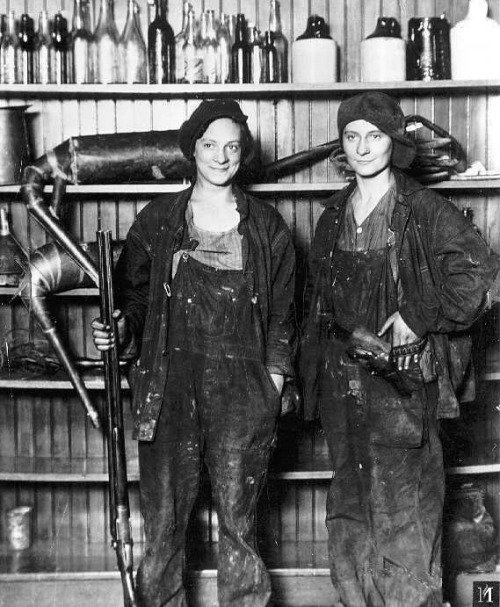
There were famous female bootleggers with names like ‘Queen of the Mountain Bootlegger,’ ‘Birdie Brown’ and the ‘Henhouse Bootlegger.’  Though there were plenty of women involved in the manufacturing, transporting, and selling of illegal alcohol in Minnesota, none were considered famous.  The Princeton newspaper offered this editorial about women who made moonshine. “The dailies tell us that a woman bootlegger was captured in Chicago.  We fancy woman ‘galosher’ would be a more correct appellation.” [Princeton Union 2-2-1922]

Whatever state they were arrested in, women were likely to receive lighter sentences.  “In 1925, a woman in Milwaukee admitted earning $30,000 a year bootlegging. That is over $400,000 in today’s dollars. The court only fined her $200 and sentenced her to a month in jail. Another court sentenced a 22-year-old bootlegger in Denver, Esther Matson, to attend church every Sunday for two years. The President of the U.S. pardoned a Michigan woman bootlegger. Similarly, the governor of Ohio reduced a woman bootlegger’s sentence to only five days.” [www.alcoholproblemsandsolutions.org] 

In Itasca County, most of the arrests of women breaking liquor laws (recorded in the newspapers) were living in towns on the Iron Range.  On the western side of the county, where there were farms, the women who were caught with moonshine were assisting their husbands with the process. This column focuses on the women from the Iron Range but first a bit of humorous history. When William Jacob Stockey was arrested, his wife Pauline “Polly” came to his defense at his trial.

Moonshiner has Novel Excuse ~ Grand Rapids Herald-Review 4-4-1923

“All sorts of excuses and alibis have been offered by those who violate the liquor laws of this state and nation, but it remained for W.J. Stockey, who lives in the east part of the village of Grand Rapids, to spring an entirely new one.  He claimed that his wife had made the mash discovered in his home and used it as medicine, benefitting from outward application.

“Acting upon information received, Sheriff O’Brien went out to the Stockey home last Sunday evening and arrested Mr. Stockey.  A search of the premises revealed several jugs which had contained moonshine, and still held small quantities, a still concealed in the attic, and in the parlor of the home, nestled alongside the heating stove, a 50-gallon barrel nearly full of corn mash, sizzling away in good shape.

“Upon being arraigned before Judge Keo Leroux for a preliminary hearing Monday, Stockey denied all knowledge of the barrel of mash.  His wife asked to be permitted to take the stand and said that she had made the mash to prepare medicine to relieve sore and aching feet.  She found it hard to explain why 40 gallons of mash were necessary for the foot soaking process but claimed that she had derived much benefit from the novel remedy, which most users take internally.”

Widows Trying to Make Ends Meet

Nora Gallagher, one of the notable women bootleggers, was a widow with five children. When she was arrested for making moonshine in her kitchen, she explained that she needed the money to buy Easter outfits for her children.  In our county, there were three widows with children arrested for violating liquor laws.

In March 1922, Mrs. Anna Sertich’s home in Keewatin was searched by a county deputy on suspicion that she was making illegal alcohol. Moonshine, mash, “and a still that has seen much use during a long period of time were seized.  It is expected that the children will be taken care of under the direction of C.B. Webster, judge of probate, and the mother tried for violations of the liquor law.  Moral conditions are said to be far from what they should be in this home, and there is little likelihood that the children would be permitted to remain there even if the violations of the liquor law were not involved.” [Grand Rapids Herald-Review 4-5-1922]

Anna (Krpon) Sertich was the wife of Emil.  He worked in the mines and died before her youngest child’s second birthday.  When she was arrested, she was caring for four children under the age of ten and her elderly father.  Her children may have been placed in foster care while Anna completed her sentence, but according to the U.S. Census, they lived in Keewatin with her and her second husband, John Schimich, by1930.

Annie Chrep married Mike Tarbuck in 1914, ten years after she had immigrated with her family from Austria. Mike died in 1921, the same year their third child was born. With three small children, women in Annie’s position had little choice but to take in laundry and mending or do piecework of some sort in the home.  That was often not enough to put food on the table. 

Mrs. Tarbuck was arrested on liquor nuisance charges in Calumet twice in November 1923.  She promptly paid the fines of $50 and $100. Liquor nuisance could be supplying alcohol by the glass.  Perhaps she thought it would be less dangerous to pour drinks for those who came to her home, rather than making moonshine. By 1925, Annie had married Paul Santrach, and the number of children in the family had grown to five.

Mary (also called Zivka) Bogdonovich was another widow from Calumet struggling to make ends meet.  Her husband, John, had died in the early 1920s leaving Mary with five school-age children. Her two adult sons contributed when they could but also had their own families.  In September 1924, Mary was found guilty of maintaining a liquor nuisance and was fined $50 and costs.  Mary did not remarry.  She died in 1932 when her youngest was thirteen.

Mr. and Mrs. Arrested

Edna Giard was another notable bootlegger. She married a bootlegger, and they were both involved in the manufacturing and distribution of alcohol from Chicago to the northern states for Al Capone.  From the Iron Range, there were five couples arrested at the same time for manufacture, transport, or sale of alcohol.

 ~ “Rosie Wuckovich, who had her place of manufacturing south of Keewatin, pleaded guilty and was sentenced to 90 days in the county jail.  She will begin her term in 45 days, as her husband is already serving a 90-day sentence in St. Louis County for a similar offense, and the wife was allowed to remain at home until his release, in order to care for the family.” [Grand Rapids Herald-Review 4-21-1924]

It appears that Rosie wanted to drink with friends one last time before going to jail. As luck would have it, she was arrested.  She pled guilty to a liquor nuisance charge and started serving her extended sentence immediately.

~ “Mr. and Mrs. Ed Wills, of Bovey, were arrested up in Lawrence Township and charged with transporting liquor. They pleaded guilty. Mrs. Wills was fined and began her jail sentence.  Mr. Wills will start his jail term of 30 days when she is released.” [Grand Rapids Herald-Review 10-15-1924]

~ “George and Rose Mandich of Calumet, both old offenders, pleaded guilty when confronted with the evidence obtained by members of the sheriff’s squad.  They had liquor in possession with intent to sell.  Fines of $200 each were levied on Mr. and Mrs. Mandich, and both will be compelled to serve thirty days in the county jail.” [Grand Rapids Herald-Review 5-25-1927]

~ “Judge Stanton sentenced several persons who desired to plead guilty to violating the liquor laws of the state.  Rex Morrow of Lawrence Lake, an old offender, was given a jail term of 90 days and a fine of $300, with 60 days additional if the fine is not paid.  His wife, Anna Morrow, arrested at the same time drew 30 days and a fine of $150, with 30 days additional if the fine is not paid.  Mrs. Morrow will serve her sentence, then return to their home to care for the farm while her husband does his time.”  [Grand Rapids Herald-Review 7-15-1925]

~ Nick and Sarah Skorich of Calumet were arrested at different times but started their jail sentence on the same day. “Sheriff Harmond and his deputies raided many places in this country during the past week, with the result that the flow of illicit liquor was still further dammed up.  Some are in jail. Some paid heavy fines. Others are out on bail awaiting trial in district court. Nick Skorich of Calumet was arrested on a charge of manufacturing moonshine, waived examination, and furnished bail in the sum of $1000 to ensure his appearance in district court.” [Grand Rapids Herald-Review 8-3-1927]

~ “Sarah Skorich of Calumet was bound over under bail of $1000 when charged with having intoxicating liquor in possession with intent to sell.  Bail is not yet furnished.” [Grand Rapids Herald-Review 8-31-1927] A few weeks later, Sarah was given a sentence of 30 days and $100 fine. Nick received a sentence of 60 days and a $150 fine.

Women Imbibing

Though women had always imbibed, they rarely did so in public before Prohibition. In small towns, there were no places for women to drink anonymously. With Prohibition, it was easier for women to set a place up in their home for others to assemble, drink homemade liquor, and perhaps dance. Here are three examples of ‘home speaks’ (speakeasy drinking establishments) on the Iron Range.

~ “Mrs. Delia Hagen was arrested in Calumet on Sunday, and a gallon of moonshine was found in her possession.  She pleaded guilty to a liquor nuisance charge on Monday before Judge Leroux and was given a jail sentence of 60 days, without the option of a fine.” [Grand Rapids Herald-Review 2-6-1924]

~ “Monotony of the daily grist of the law violations was broken in justice court on Tuesday when Mrs. Sam Dimich of Bovey pleaded guilty to maintaining a liquor nuisance at her home there.  The arrest was made by Sheriff O’Brien and Deputy Dickie.  Upon her plea of guilty, Mrs. Dimich was assessed a fine of $100 and costs, with an alternative of 30 days in the county jail.” [Grand Rapids Herald-Review 5-28-1924] Mrs. Dimich’s first name was Katherine.

~ “Mrs. Selma Rikala of Nashwauk was arrested last Saturday by Phil Griffin, deputy sheriff, and accused of dabbling in illicit sales of liquor.  Upon being arraigned before Judge Leroux in Grand Rapids, Mrs. Rikala pleaded guilty to maintaining a liquor nuisance, and was fined $100 and costs, which she paid.” [Grand Rapids Herald-Review 7-29-1925] Selma’s maiden name was Vesola, and her husband’s name was Isaac.

“There’s Only One Thing to Do, and That’s to Get the Kettle Out” ~ Itasca County During Prohibition ~ part 5 of 8

3.9.2021 [archived ~ previously published 9.13.2020]  

Frank Werthner was a trapper from Bustitown.  He also made a moonshine near Larson Lake, northeast of Effie.  In 1923 he was arrested and was sentenced to 45 days in jail. [Photograph courtesy of the Rajala family descendants]

It’s always fun to get information from other sources than just the newspaper. And it just so happens, I have a few to enhance the Prohibition stories of Bigfork and Effie.

Moonshine Meant Food

The Prohibition years overlapped with the Great Depression.  Sometimes making moonshine was a way to put food on the table. David Patrow, son of homesteaders Orin and Katherine (Costello) Patrow, illustrated this in his booklet Bigfork Valley Memories.  Dave was born in 1911 and was probably about fourteen years old when this incident took place.

“A lot of my neighbors made some moonshine. I remember one guy that used to get religion and quit making it.  One day he came along to our place and was kicking about being hard up, so my dad told him, ‘Doc,’ he said, ‘there’s only one thing to do, and that is to get the kettle out.’ Doc threw up his hands and said, ‘I’ll starve first!’ Dad answered, ‘If you change your mind, I’ll stake you enough stuff to get you started.’ In less than a week, Doc was back looking for enough money to get some sugar.  He justified it by saying he saw it in the Bible, ‘Give strong drink to the weary.’

“Later, his wife took the boy [their son] and left him.  He got to drinking too much of his own product, and they found him drowned in the river.  The story goes he had a pint of moonshine in one pocket and a Bible in the other.” [Vol 1 1989,Chapter titled The Moonshine Era]

I found this article in the April 29, 1927 issue of the Bigfork Times and wondered if it could be about the same individual. “Tuesday forenoon Ed Hamilton discovered the body of a man in the Big Fork River near his place in Busti, and notice was immediately given to Deputy Sheriff A. Peloquin of Bigfork and Coroner W. Herreid of Deer River who proceeded forthwith to make investigation which revealed the fact that the body was that of William Daughter.

“Mr. Daughter’s home was near where the body was found, and he was last seen by any of his neighbors about a week before.  It is supposed that he was crossing the river in his small boat and that the boat had capsized, and as the water is very high and swift, the unfortunate man was unable to save himself. The remains were taken to Deer River for interment. Mr. Daughter had resided in Busti with his family for a number of years and was quite well and favorably known in these parts.  For the past year, his family – a wife and son – have been making their home in Colorado where they will receive the sad news.”

William Block

Another character, William Block (in some places, the name appears as Black), was caught by deputy sheriff Jesse Harry and George Keenan in 1922.  “Block was located on the banks of a small creek a mile and a half southeast of Effie.  He had been away for some time and had just nicely got his still working again.  He had only a couple of gallons moonshine whiskey run off but was stoking the fire to make more when the officers came.  He was arraigned and bound over to the next term of the court under a $1000 bail, which he was unable to furnish.”

Several years later, when law enforcement responded to complaints about moonshiners instead of searching out liquor law violators, Mr. Block was again under scrutiny.  At this time, he was living at Farm Camp on the Rice River.  “Sheriff Harmond and a force of deputies accompanied by Deputy Peloquin of Bigfork made a trip to Black’s place last Friday and thoroughly searched his place and surrounding for such evidence as had been reported, but were unable to find any evidence that would warrant arrest for violations of the liquor law.” [Bigfork Times 6-24-1927]

Frank Werthner

Gene Rajala was born a few years after prohibition was over, but he was well aware that his great grandmother’s second husband, Frank Werthner, made moonshine.  Gene shared the following, “Frank and Jess Bowerman were both trappers.  They also made moonshine.  It was important to have a moonshine operation hidden away, and theirs was about five miles from the nearest road.  They had to carry the corn and sugar into their ‘camp.’  In the late 1970s, we went out to see if there were any signs of the old place. Frank knew right where it was, but as expected, there wasn’t anything left to identify it. I know Frank was arrested and did spend time in jail.”

To Gene’s amazement, I was able to find a newspaper article that detailed his step-great grandfather’s arrest. “Frank Werthner, who lives on a homestead in Bustitown, was arrested by Deputy Sheriff Dunn, who found a still, some mash and several quarts of moonshine at the homestead.  He was given a jail sentence of 45 days.” [Grand Rapids Herald-Review 9-12-1923] The story was short, but it verified the folklore which means a lot to any family.

Harry and Harry

In the mid-1920s, there were two men named Harry, who made a substantial amount of moonshine in Bigfork’s backwoods.

Harry Myers was born in Ohio in 1894.  He lived in St. Paul and worked as a locomotive crane engineer in 1917 when he registered for military service.  In 1924, Myers obtained the distinction of having the largest moonshine operation ever located in the county.

“Myers was lying on top of one of the tanks calmly smoking a cigarette when the officers entered.  He made no resistance.  In each of the four corners of the cabin was a mash tank, each with a capacity of 400 gallons.  All the tanks were full, the officers destroying more than 1600 gallons of mash.  Each tank had a different mixture.  One was filled with corn, one with corn, rye and figs, a third with peaches, and the other with apricots.  Myers showed the accurate knowledge of the distiller.  He knew the chemistry of every beverage and could provide almost any brand.

“In addition to the mash, the officers seized a 90-gallon still, 1500 pounds of sugar, 6 cases of molasses, a 10-burner gasoline stove, and 15 gallons of moonshine.  The moonshine, still, and other necessary evidence were placed in and on the car, and with Myers taken to Grand Rapids.  All of the other material was destroyed.  The tanks were drained, and the entire outfit, including the cabin, was soaked with kerosene and fired.  The destruction was complete.” [Itasca News 4-5-1924]

Harry Frances Clark was born in 1895, and by 1920 was working at the Itasca Paper Company (later renamed Blandin Paper) in Grand Rapids. A year after Myers still was destroyed, Clark’s operation was also dismantled.

Find Huge Still East of Bigfork ~ Grand Rapids Herald-Review 5-20-1925

“Deputy Sheriff Chas. Tupper of Bigfork brought in Harry Clark, who is charged with operating a still in a remote location near the game refuge, several miles east of Bigfork.  The still was a huge affair well equipped with coils and pipes.  Some mash and some manufactured moonshine were also taken. Clark expressed a desire to plead guilty and will doubtless be sentenced by Judge Stanton while he is in Grand Rapids.”

Transporting Moon

Martin Staley was arrested several times during a six-month period in Bigfork for transporting liquor. He must have thought it to be a profitable endeavor even with the minimum fine being was $50 and 30 days in jail. At some point, though, the judge upped the ante.

In May 1925, Staley was arrested with twenty gallons of moonshine in his Ford coupe. In addition to a jail term of 90 days and a fine of $300, his car was confiscated and sold by the county.

“A Place Where Law and Order are to be Upheld” ~ Itasca County During Prohibition part 4 of 8

3.8.2021 [archived ~ previously published 8.23.2020]

Making arrests, especially during Prohibition, could be hazardous, even in Itasca County.  In July 1922, John Lence caught wind that his home in Taconite had been searched for moonshine and that law enforcement was looking for him.  A train ran between Grand Rapids and Duluth several times each day. Lence was expected to be on the evening train and, if so, would disembark at the Holman station just east of Taconite.

Earl P. Hyatt and Howard Harmon are identified as deputy sheriffs and employed at the Oliver Mine as policemen.  As mentioned in a previous article on Prohibition, there were no specific guidelines for the enforcement of the Eighteenth Amendment when it took effect in January 1920.  It appears that in Itasca County game wardens and mining company policemen had the authority to make illegal alcohol arrests. Hyatt and Harmon were waiting at Holman station.  When Lence got off the train, they planned to place him under arrest.  Lence had already decided as to how he wanted to deal with the situation. He shot both men, claimed self-defense, and was found guilty of murder less than two months later.

Moonshiner Shoots Two ~ Grand Rapids Herald-Review 7-5-1922

“Enraged because his activities in disposing of illicit liquor had been discovered, J.L. Lence, former Oliver policeman at Taconite, shot and seriously wounded E.P. Hyatt and Howard Harmon, Oliver patrolmen and deputy sheriffs, last Monday evening.  The shooting occurred at Holman, the Great Northern station nearest to Taconite, just as Lence stepped off the evening train to return to his home in Taconite.  Four shots were fired by Lence, three taking effect in Hyatt, and the other in Harmon.  Hyatt was shot twice through the neck and once in an arm, while Harmon was shot through the left breast, just above the heart.

“It appears that activity in moonshining was suspected of several individuals in Taconite, so the officers came to Grand Rapids on Monday and secured search warrants.  A search of three houses resulted in the arrest of Paul Salitero and H.N. Steinhart, and the finding of evidence in the Lence home.  Lence himself was away, however, and Hyatt and Harmon took the evidence they found and brought it and their two prisoners to Grand Rapids.  They then returned to Holman to await the arrival of Lence, who was expected on the Merry Widow train.

“Evidently, Mrs. Lence, or someone else knowing his location during the day, had telephoned him of the officers’ action, for when he got off the train, he had his heavy revolver in his right hand, carrying his grip in front to conceal it.  Seeing Hyatt and Harmon awaiting him on the platform, he opened fire as he stepped from the train, dropping both at once.  He then ran from the platform, and took the road to Taconite, escaping in the gathering dusk. His wife ran behind him, shielding Lence so that others who were on the platform could not shoot the escaping criminal.

“Word of the shooting was telephoned to the office of the sheriff in Grand Rapids and the Oliver police headquarters in Coleraine as soon as possible, and the injured men were taken to the Coleraine hospital.  The entire section between Holman, Taconite, and the mine pits to the north was surrounded, for it was thought Lence was hiding there.  Instead of that, however, he escaped through the cordon of guards and walked to a point two miles west of Coleraine, where he secured a lift from Claude Merritt of Deer River, who had been on the range and who was returning home.  Reaching Grand Rapids, the gunman first secured a lunch, and then went to the county jail and asked to be locked up, saying he had shot the officers.  He was immediately accommodated, and the hastily formed posse called in.”

The following day, the Iron Range News reported that while at Duffy’s restaurant, Lence heard that everybody knew what had happened and he told Deputy Sheriff Ed LeFevre that “he would no longer try to make his getaway.”

Although every effort was made to save Hyatt’s life, he died from the gunshot wounds two weeks later.  Immediately following Hyatt’s death, Judge Charles Stanton called a special term of the district court in Grand Rapids.  The term was scheduled to begin August 17. Both grand and petit jurors were drawn for the purpose of trying Lence, who was now charged with the murder of Hyatt.  It was one of the first murder trials in the county since women had the right to vote and be part of a jury. Alma Chalberg, the wife of Charles Chalberg of Goodland, “was ‘foreman’ of the [grand] jury which was made up largely of women.” [Iron Range News 8-24-1922]

John Lence

John Henry Lence was born about 1874.  At trial he stated he was from Kentucky, but the information in the 1930 and 1940 federal census records indicate he was born in Tennessee.  It is not known what brought him to Itasca County or when he arrived.  There is a Charles and Clara Lence in Bass Brook as early as 1905, but they were born in Iowa and Minnesota, respectively.  John Lence was married at the age of 42, and there are no known children.  He told Judge Stanton that while in Minnesota, he had lived a short time in Bemidji, Deer River, and Cohasset. When he got the job at the Oliver Mining Co., he and his wife lived in Taconite.  I have found no information on Mrs. Lence, other than that she died between 1930 and 1940.

Major Earl Hyatt

Earl Pearl Hyatt was born in Anoka, MN, in 1881.  He married Catherine Stewart, and together they raised two sons, James and Irving.  The 1910 Federal census shows the family living in Anoka, and Hyatt working as a store clerk.  Hyatt received the commendation of major during his nearly 20 years in the army.  He started as a member of the Minnesota National Guard in 1899, and by the time he returned from France after WWI he was a major.

The 1920 census shows Hyatt’s family living in Anoka, but he is not listed in the household. The Grand Rapids newspaper stated that he had been a deputy sheriff in Deer River before taking the job as a policeman for the Oliver Mining Company. Perhaps upon returning to Minnesota, he came north in hopes of securing a good position before moving the family.  General Albert F. Pratt was Colonel in the regiment in which Major Hyatt served in the army.  He was a friend of Hyatt’s and agreed to aid the prosecution in the trial of Lence, the man who killed his comrade.

Trial

The murder trial of John Lence began on Tuesday, August 22, with the selection of ten jurors from a pool of sixty men and women.  The following day, after two more jurors were secured, the presentation of evidence began.  There were fifteen witnesses for the prosecution and six for the defense.  Lence pleaded he shot in self-defense and, while on the stand, stated that the officers struck him with clubs. By late afternoon on Thursday, the case was given to the jury who returned a verdict several hours later.

Found Guilty of First Degree ~ Grand Rapids Herald-Review 8-30-1922

“‘Guilty of murder in the first degree.’ This is the verdict of the jury that tried J.L. Lence for the murder of Earl P. Hyatt, Taconite patrolman for the Oliver Iron Mining Company and deputy sheriff of Itasca County.  The evidence was all heard, the attorneys made their pleas, and the case was given to the jury, on Friday afternoon at 3:30.  It is reported that the jury determined the guilt of the defendant in less than ten minutes after entering the jury room, but that the degree which should be named took them several hours to decide.

“Judge Stanton and a large number of interested spectators were in the courtroom when the announcement was made late Friday evening that a verdict had been agreed upon.  The judge took his place on the bench, and the jury filed in.  After the verdict had been read, each member of the jury stated that it was his or her verdict.  The judge then congratulated the jury members on performing a difficult and disagreeable task in a satisfactory manner and discharged the members.

“The sentence was then passed upon Lence, who was present in the courtroom with his attorneys.  Judge Stanton imposed the penalty of imprisonment at hard labor in the state prison at Stillwater ‘for the term of your natural life’.

“During the trial, the defense attempted to enter a plea of self-defense in the killing of Hyatt and the shooting of Harmon.  This was disproved, however, by the testimony of a number of eyewitnesses who showed conclusively that no attempt was made to strike Lence or injure him in any way before the shooting was started.

“It is the general expression of opinion that the state’s side of the case was presented in the best possible manner by Ralph A Stone, County Attorney.  Mr. Stone worked diligently in the preparation of the case and presented the evidence in such a manner that it was clear to the jury, beyond doubt.  The summary disposal of this case, and the immediate sentence of the guilty man, will do much to put Itasca County on record as a place where law and order are to be upheld, and criminals punished.”

The jury for the trial included seven women and five men.  The newspaper listed the women by their husband’s names.  Instead, I chose to identify them by their birth name first. Elvira “Vie” (Crabill) Gary, Cohasset; Josephine Syverine (Noderhaug) Bartels, Cohasset; Emma Ruth (Sturgeon) Franti, Bovey; Eldora “Hattie” (Zimmerman) Franks, Coleraine; Mary (McDonald) Harlin, Marcell; Margaret (Benzing) Passard, Grand Rapids; and Mrs. G. Hill, Marble.  I could not find Mrs. Hill’s given name.  The men were: Albin Rudquist, Third River; James Duffy, Grand Rapids; John Rush, Bowstring; Ed Bowman, Nore; and Ernest Sweedman, Max.

“Too Far Out in the Wilderness to be Found” ~ Itasca County During Prohibition part 3 of 8

3.7.2021 [archived ~ previously published 8.9.2020]

It is safe to assume that long before January 17, 1920, when Prohibition was official, those who planned to make alcohol for human consumption had stockpiled the ingredients needed – grain and fruit or sugar. Because moonshine was made in secret, there are no standardized measurements, so it was often trial and error.  Basically, it was equal amounts of water and corn or a malt grain (rye and/or barley) plus a one-quarter ratio of sweetener. 

“Five gallons of water, five gallons of grain, and 10 pounds of sugar. This mixture is stirred together and needs to be covered to allow for fermentation, which can take a couple of weeks. 

Distillation is the process of separating a mixture of liquids with different boiling points. In this case, we’re trying to separate ethanol (alcohol) from water. Pure ethanol boils at 78.4 degrees Celsius, and water boils at 100 degrees Celsius, so heating the mash will make the ethanol boil off first.

A still has three separate parts – something to heat the liquid, something to help water vapors condense before they escape the apparatus, and something to cool and trap the alcoholic vapors. These parts are the vat, column, and condenser.” [https://www.instructables.com/id/Build-a-Whisky-Still]

Obviously, those manufacturing moonshine went to great lengths to hide their illegal operation and any outward signs that might indicate they had a second occupation. Containers of mash and homemade stills were found in barns and attics, sheds out back, and even in a rented room of a boarding house.  Two types of ingenious locations were deep in the ground and deep in the swamp.  

Deep in the Ground

The Grand Rapids Herald-Review reported that Nick Partina of Calumet had a two-story basement, and it was in the lower level that his moonshine set up was found.  “Sheriff Carson and Deputy Sheriff Jesse Harry went to Calumet and examined several places suspected of harboring moonshine operations.  At the Partina residence, they investigated the house first and later searched for a cellar.  Finding a trap door in the linoleum they were assured by Mrs. Partina that they would be unable to get into the basement there and that it was not in use.

Sheriff Carson swung down into the basement, however, and aided by a flashlight began an investigation.  No evidence was found here, but upon kicking aside a pile of old boards and other rubbish in the basement corner, a second trap door was found.  This being lifted, they discovered a flight of stairs leading into a second cellar 10 feet deep. A complete still for the manufacturing of moonshine was found together with more mash in several stages of preparation.  Several gallons of moonshine were seized and the still taken as evidence along with samples of the mash.  This unusual basement was equipped with electricity for lighting and also for heating an electric heater being used for making the mash.  [3-23-1921]

George Stupar immigrated from Croatia in 1916 and settled on the Iron Range.  He lived just north of Nashwauk, and had his moonshine still cleverly concealed until February 19, 1922, when he was arrested.  The officers searched for quite a while as they were sure he had an illegal alcohol manufacturing operation on the premises.

“Noticing in one place where the ground appeared to have been recently disturbed, a pick was secured, and a trap door found.  Lifting this disclosed a flight of stairs that led down into a pit or cellar, well walled up with timber, and which contained several barrels of mash and a copper still of large capacity.  The fermented mash was cooked on a common wood stove, and the pipe was led from the stove to the surface of the ground, where it was connected with another old stove that was used for heating water with which to wash clothes.  Anyone noticing the smoke coming from the old stove on the surface of the ground would have thought it had recently been used for heating water and would not have looked close enough to see the pipe leading up from the sub-cellar below.  The arrangement fooled the officers for some time, but the puzzle was finally solved.

Stupar pleaded guilty and was sentenced to ninety days in the Itasca County Jail.” [Grand Rapids Herald-Review 2-22-1922]    

It had been rumored that Matt Piispanen, who lived near Max, had been making hooch for his neighbors, but no one mentioned that the still was under their Finnish bathhouse. “When the officers investigated Piispanen’s place, he claimed he did not drink and that he did not like anyone who handled intoxicating liquor.  A search of the house, however, revealed loose boards in the floor of one room.  When these were raised, two barrels of mash were found, one of them ready for the still.  Encouraged by this success, the officers searched the bathhouse and found the still constructed from copper tubing and a wash boiler underneath the floor.  They were now determined to investigate all the floors, and underneath the floor of the garage found two five-gallon jugs, one two-gallon jug, and two kegs filled with moonshine. Piispanen is bound over to await the district court’s action, charged with the manufacture of liquor and possession of a still and mash.” [Grand Rapids Herald-Review 3-4-1931]

Deep in the Swamp

I have two examples of moonshine operations located deep in swamps, and one that was never discovered.

Jeff Bishop, a Reminisce reader from Grand Rapids, shared a story his father-in-law Eino Kekkonen, told him about coming face to face with a moonshiner in 1926 when he was ten years old. I have not located any documentation that this operation was discovered during Prohibition, and since there were some building remnants, it is possible moonshine was made until 1933.

 “Twenty years ago, before he died, my father-in-law, Eino Kekkonen, took me to his deer hunting country where he grew up to show me around. It was east of Wabana Lake and south of Murphy Lake. Eino showed me the spot, and you could still see the hollowed-out hillside and scraps of stovepipe, sheet metal, and such.

His father, Albin, was a carpenter and logged by himself in the winter with his draft horses. They were out in the bush there that fall looking for timber for his father to cut when they walked right into a moonshine operation. It was set up into a hillside in a small bowl of a balsam swamp, and the crew was there making shine. Eino was scared out of his wits being ten years old and hearing stories of people getting killed by moonshiners. His father, however, kept his composure, and the man in charge approached him. They vaguely recognized each other but were not acquainted. The man inquired what they happened to be doing back there. His father remarked that he was looking for timber to cut that winter but that this particular area did not seem to have what he was looking for, and he was going to scout elsewhere. At that, the men shook hands, his father was handed a jug of shine, and they said farewell.”

It seems that it was winter when the stills were underground, and spring and summer when they were in the swamp.  The further away from roads, it was figured, the less likely the smoke from the stove could be seen.

840 Gallons of Mash ~ Grand Rapids Herald-Review 7-18-1923

“Marko Kapudja and Dave Stupar thought they were too far out in the wilderness to be found, when they established camp five miles north of Marble, out in a swamp.  Deputy Sheriff Dickie thought otherwise, however, and came upon the men when they were sampling a run of moonshine.  Their outfit included three stoves, two stills, a number of barrels, 840 gallons of mash, 30 gallons of moonshine and a hundred-pound sack of sugar.  All that store of supplies packed in five miles across the hills and swamps for there was no road to their place.  The men have both agreed to plead guilty and will be taken to Bemidji for sentence.”

Although the above article was a record for the amount of mash found, I believe this next one had the nicest equipment.  Joe Rabonovich of Calumet was the owner of the operation. He was not apprehended on site, he was arrested with liquor in his possession before the day was over.

Breaking Up Biggest Moonshine Outfit ~ Grand Rapids Herald-Review 5-25-1927

“One of the largest moonshine outfits ever captured in Itasca County was brought in by members of the sheriff’s force who conducted a raid south of Calumet.  The entire outfit was new and up-to-date and had evidently just been installed.  From appearances, the first batch of moonshine was about to be produced when the officers raided the place.

Two stills were captured, one of 35 gallons and the other of 50 gallons capacity.  Twelve barrels of assorted mash was ready for distribution.  This mash was made partly of apricots, partly of corn, and partly of raisins, thus evidently intending to give possible customers a choice in their brand of liquor.  Other equipment included 20 jugs each of five gallons capacity and four new 15-gallon kegs.  Even the shack in which the outfit was housed was new and had just been completed.  It was located in a swamp, somewhat difficult to access.

The stills were brought to Grand Rapids, the jugs were broken, the mash spilled, and the shack and the barrels were burned.  So, the moonshiner who attempted to get his start here will find it necessary to begin over again.”

“Fined $250 for Having a Quart of Moonshine” ~ Itasca County During Prohibition part 2 of 8

3.6.2021 [archived ~ previously published 7.26.2020]

Prohibition agents destroying barrels of alcohol, c.1921. [Wikipedia]

Even though the Prohibition amendment made the transportation, production, and sale of alcohol illegal, it did not provide recommendations on how those laws could be enforced. In 1920, when the Bureau of Prohibition was first established, it was a unit of the Bureau of Internal Revenue. In 1927, it became an independent entity within the Department of the Treasury, changing its name from the Prohibition Unit to the Bureau of Prohibition. 

The Bureau’s primary function was to stop the selling and consumption of alcohol. The agents were responsible for dismantling bootlegging rings.  Federal agents were notorious for raiding popular nightclubs in cities like New York and Chicago.  In northern Minnesota, they concentrated on smuggling from Canada and the activities of small-time bootleggers.

“The IRS subsequently established the Prohibition Unit, staffed by agents who were not required to take Civil Service exams, leaving the door open for members of Congress and local pols to appoint their cronies, including applicants with questionable backgrounds. The government provided funds for only 1,500 agents at first to enforce Prohibition across the country. They were issued guns and given access to vehicles, but many had little or no training.”  [prohibition.themobmuseum.org]

Itasca County law enforcement personnel assisted federal agents on many occasions. Grand Rapids Herald-Review editor Laurence Alonzo Rossman shared the following on April 23, 1956, Up in This Neck of the Woods column. “Moonshiners were the top public enemies in Itasca County 35 years ago.  Few issues of the newspapers failed to carry the story of some man who tried to operate a still deep in the woods of Itasca County.  Moonshining was on such a sizable basis between northern Minnesota and Canada that federal agents finally brought a submarine chaser to use on the Great Lakes.  It ran down a number of tugs loaded with whiskey, and the fear of the speedy vessel was reported cutting down the rum-running efforts.”

The federal court was held in Duluth and, depending on the length of the sentence, lawbreakers would be sent to a county jail or a federal penitentiary. The Itasca County men convicted at Duluth were sent to jails in Aitkin and St. Louis Counties, while our county got prisoners whose homes are in other counties.

Itasca County generally had six to ten federal prisoners in the jail during Prohibition and benefitted financially from this arrangement.  The United States government pays the county $1 a day for each prisoner’s board, and the county pays the sheriff 75 cents a day.  The difference represents a direct profit to the county.

The smallest sentence issued by a federal judge in Duluth was a fine $34 in 1921.  Ten years later, the largest was five years in Leavenworth and a fine of $10,000. 

Noteworthy Raids

Federal Agents Discover Still ~ Grand Rapids Herald-Review 8-18-1920

“Activity on the part of federal agents who are endeavoring to stop illicit traffic of liquor brings grief to the men who are endeavoring to make an easy living from the weaknesses of their fellows.  Special agents are investigating many suspicious cases in the vicinity of range towns and other parts of Itasca and St. Louis counties.

Monday of the week, federal agents found a still in a swamp near Calumet and arrested the proprietor, Eli Pastila.  The agents allege that three barrels of mash, a quantity of moonshine, and parts of a still were seized.  Pastila was arraigned before O.A. Portier, United States Commissioner, at Virginia, and held to the federal grand jury, which meets next January.  Unable to raise the $1000 necessary for bail, he will remain in jail.

Nick Korskovich of Marble was arrested last week on a disorderly charge and, upon investigation, yielded evidence which warranted holding him for the federal authorities.  It is also reported that Anton Gerbec of Bovey was also taken in charge by federal agents last week and held for the next term of the United States’ court.

Men who have been engaged in smuggling booze across the border from Canada at International Falls and Fort Frances will find it more difficult to get supplies in the future.  Canadian agents raided the bars and hotels in Fort Frances last Monday and arrested 48 men.  The proprietor of the Prince Albert Hotel paid a fine of $2000, while two others paid fines of $1000 each.  It is evident that the liquor laws in Canada are strictly enforced, and that they have teeth in them.”

In 1929, the Increased Penalties Act or Jones Law was passed. The Jones Law increased penalties for violations previously set in the Volstead Act. First time offenders were now expected to serve a maximum of five years and a $10,000 fine as opposed to the previous six months and $1,000 fine in the Volstead Act.  This legislation seemed to ramp up the arrests as well as the coffers.

Federal Officers Made Raid Monday ~ Itasca News 9-19-1929

“As a climax to several weeks of investigation by employees of federal prohibition forces, raids were made at several points in western Itasca County last Monday night, and six persons were arrested.

C.W. Williams, a federal officer, was in charge of the raids and was assisted by Sheriff Harmond and Deputy Milne.  While warrants were served Monday night, it is reported that several of the offenses charged were of an August dating.

Here in Deer River, two were taken, William Murphy, proprietor of the Liberty Cafe, was charged with possession and sale, and Ernest Menton, who lives near the tourist camp, was similarly charged.  Both appeared in justice court in Grand Rapids Tuesday, pleaded guilty, and were bound to await the district court’s action, which convenes next Tuesday.  Bail was furnished, and they were released.

Others gathered on Monday night are Morris Quinn of Ballclub, Leo MacAdam and Mrs. John Bendwell, of Shady Rest Resort, and Louis Pinette of Bigfork.  Quinn is charged with sale and possession with intent to sell. It is said that because of previous convictions, Quinn faces the possibility of severe punishment. MacAdams, Mrs. Bendwell, and Pinette were all charged with sales.  All pleaded guilty, were bound over to the district court next week, and released on bonds.”

Federal Agents Raid Craigville ~ Grand Rapids Herald-Review 10-16-1929

“Federal prohibition officers staged a raid at Craigsville, just over the line in Koochiching County, last week.  Several arrests were made, and some stills located and seized.

The four men arrested gave their names as Joseph Desaudel, Isaac Hibbler, Ole Kas[illegible], and Louis Arseneau.  All were arraigned before Otto A Poirier, US court commissioner at Virginia, Kas[ ], and Hibbler furnished the bail of $2000 to guarantee a later appearance.  It is alleged that the others were second offenders, and they had more difficulty in obtaining bail.  It was alleged that evidence in the shape of intoxicating liquor had been obtained at all of the places raided.

The federal officers were well informed concerning conditions at Craigville, for they went into the woods a quarter of a mile from the village and found two stills.  At one of them, 1400 gallons of mash and 45 gallons of moonshine were found.  Other arrests in connection with ownership of the stills are expected.”

Sentences and Fines

The federal court was held several times a year in Duluth, and most of the cases were for violation of the liquor laws.  Here are snippets from the 1920s.

~ The busiest place in northern Minnesota has been at the federal court in Duluth where the grand jury returned approximately 225 indictments. Several weeks will be taken for the trials of defendants. Most of them were accused of violation of the liquor laws.

~ In one day, 32 defendants, of which 26 were Italians, faced the court and were fined small amounts.  However, the whiskey makers found the court very much more severe, and some fines were as high as $500 and six months in jail were given out.

~ Paul Dossen, an Itasca County miner, was fined $34 for having a pint of moonshine whiskey.

~ Frank Indriery was fined $250 for having a quart of moonshine in his possession in a soft drink parlor in Nashwauk. 

~ One day, 46 men faced Judge McGee, and of these, only four were born in the United States. 

And the 1930s.

~ Frank Rettinger of Arbo Township pleaded guilty to a charge of maintaining a liquor nuisance and was sentenced to serve eight months in the Itasca County jail.

~ Calvert Bardino, Keewatin was found guilty of transporting liquor and sentenced to 18 months in the federal prison at Chillicothe, Ohio. 

~ James Foubister and Michael Silverman of Duluth were each sentenced to serve five years in Leavenworth and pay a fine of $10,000.  They were the heads of a widespread alcohol ring operating at Duluth and vicinity.   The 1930 United States Census states that Foubister’s occupation is a city commissioner and Silverman’s as an automobile salesman.

~ John Bilodeau, Calumet, was sentenced to serve eight months in the Crow Wing County jail at Brainerd.

~ Glen Lemaster of Willow Beach, west of Deer River, paid a fine of $250 on a possession charge. 

~ Millie Adams, Craigsville must serve 90 days in the Crow Wing County jail at Brainerd